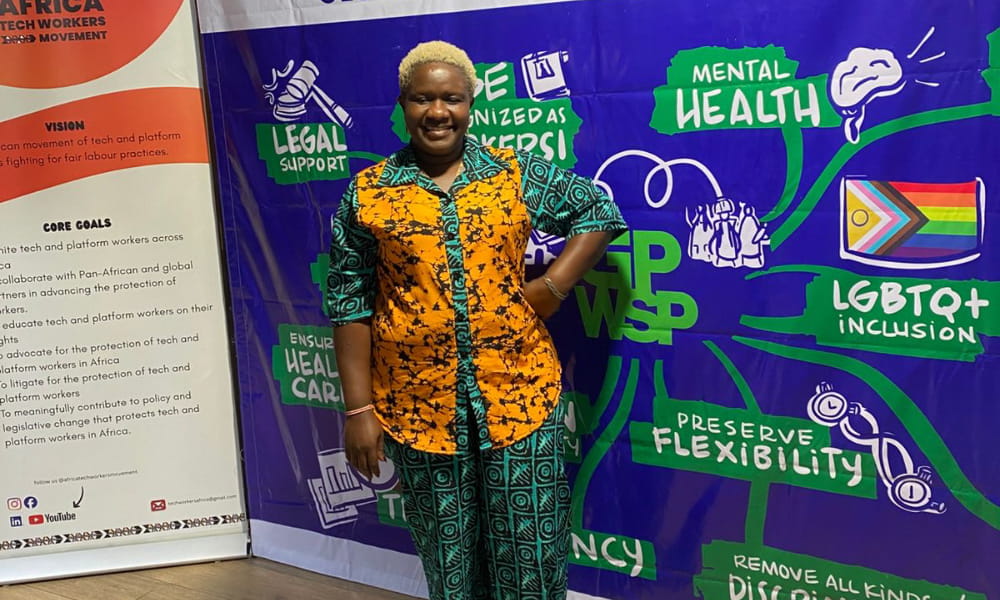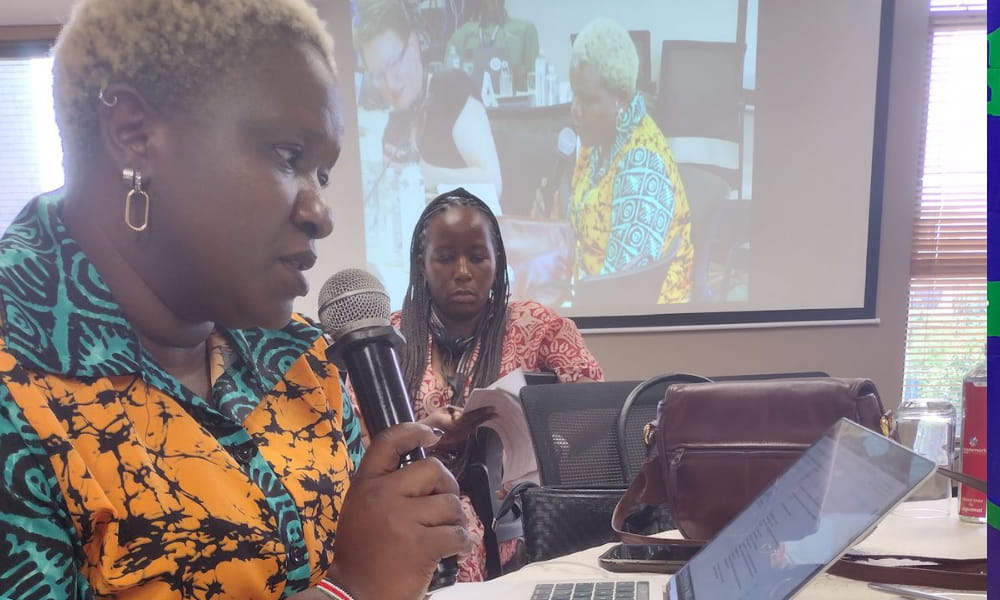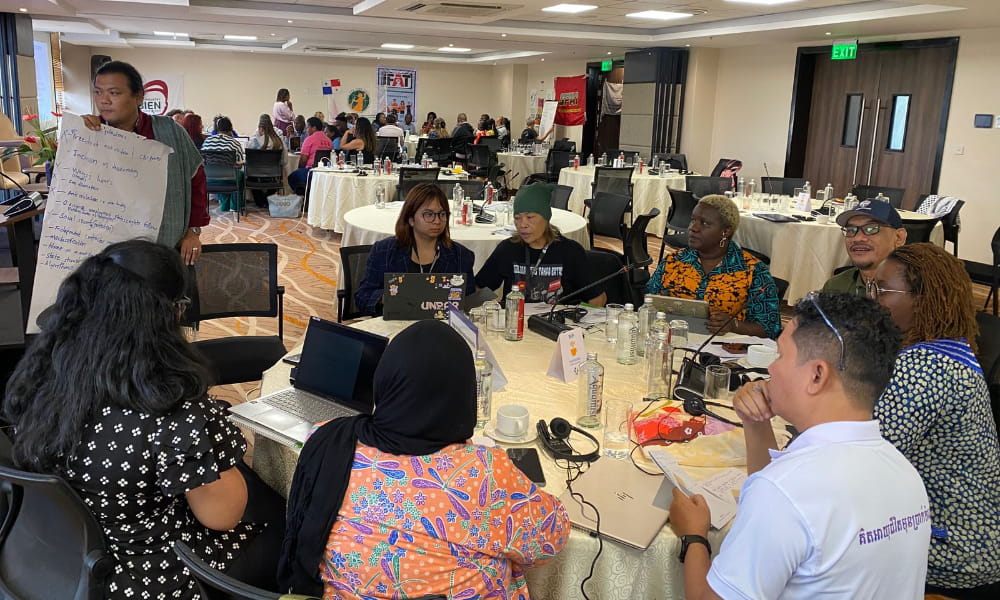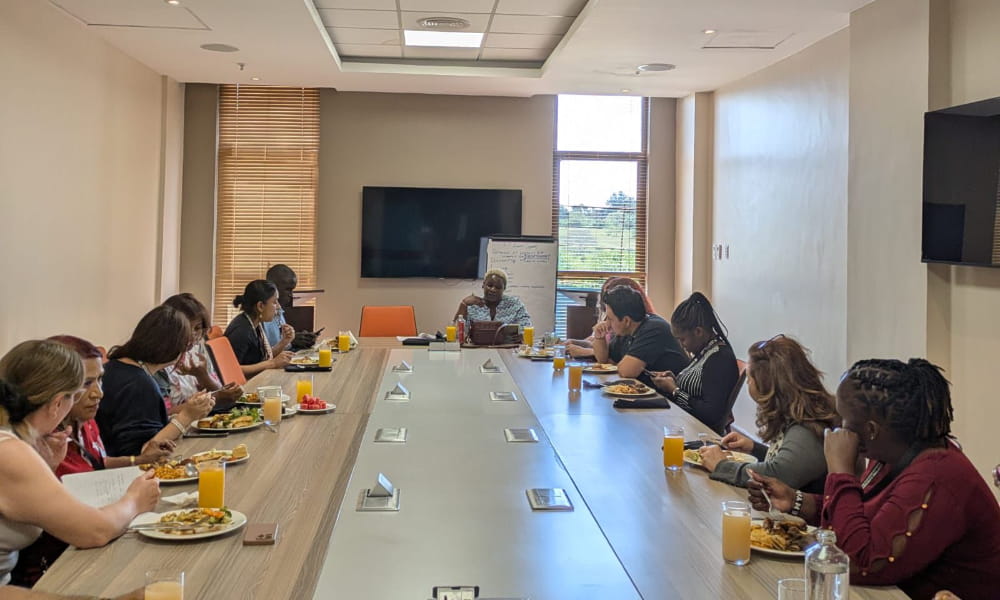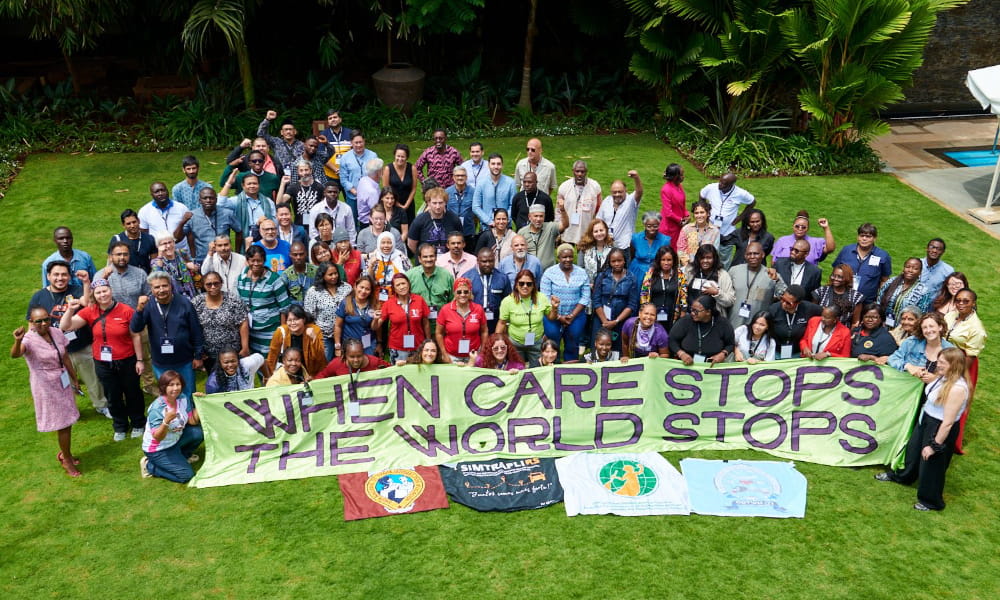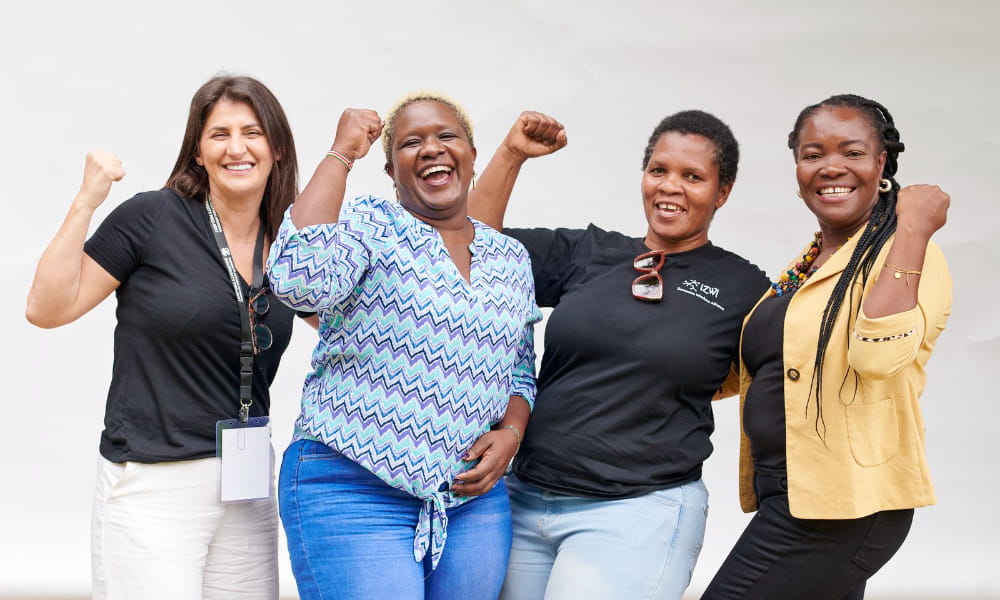

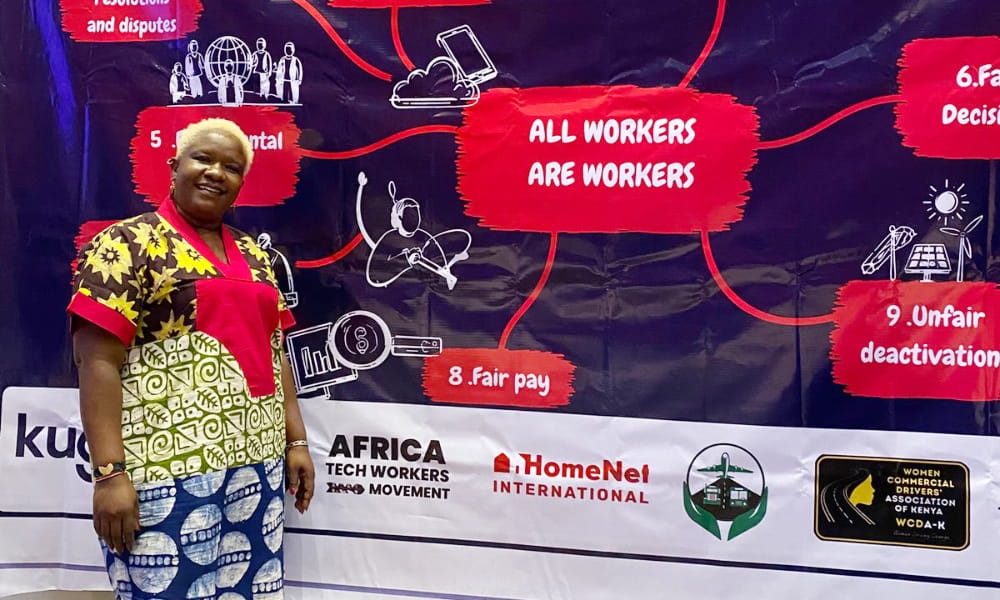
HomeNet International (HNI) was present and actively engaged at the Global Platform Workers Solidarity Project Convening, held in Nairobi from 10 to 12 May 2026. HNI was represented by its interim coordinator, Jemima Nyakongo, who ensured that home-based workers’ rights were included in the discussions on the platform economy. Through her interventions, HNI made clear that home-based workers are also platform workers and must be recognized within global debates on the future of work.
Her participation helped foreground an often overlooked reality: many home-based workers are already integrated into platform-mediated production and online marketplaces. By consistently raising this perspective, HNI contributed to broadening the understanding of who platform workers are and why global labour standards must include them.
Building a unified strategy for the ILC
The convening took place as part of preparations for the 2026 International Labour Conference (ILC), where discussions on platform work were a key agenda item. Participants worked to develop a unified strategy to influence outcomes at the ILC, including coordinated engagement with trade unions and government delegates and the submission of consolidated amendments to the Blue Report.
There was broad agreement that fragmented advocacy would not be sufficient to shape global standards. Instead, participants focused on building collective positions capable of influencing negotiations more effectively.
Delegates also reflected on tactical approaches used during the process, including assertive, non-walkout strategies that allowed workers’ representatives to maintain pressure while remaining engaged in negotiations. The aim throughout was to secure a strong and meaningful convention on platform work, supported by clear recommendations.
Centering sector realities and gender justice
The discussions highlighted the diversity of platform work across sectors, while also identifying shared structural challenges such as income insecurity, algorithmic control, and lack of social protection.
A strong consensus emerged that gender justice had to remain central to any global framework on platform work. Women workers, particularly those in lower-paid and more precarious segments, faced intersecting forms of inequality that required explicit recognition in global labour standards.
HNI’s contribution strengthened this framing by linking platform work debates with the realities of home-based workers, ensuring that HBWs were explicitly considered in the broader policy discussions.
Immediate next steps in Kenya
Following the convening, the Kenya Negotiators Group advanced a series of coordinated actions to sustain momentum and expand public engagement around platform workers’ rights.
These included drafting a support letter for a platform economy convention to the Ministry of Labour, as well as launching a multi-component media campaign.
The campaign included:
- Social media outreach supported by videos and illustrations
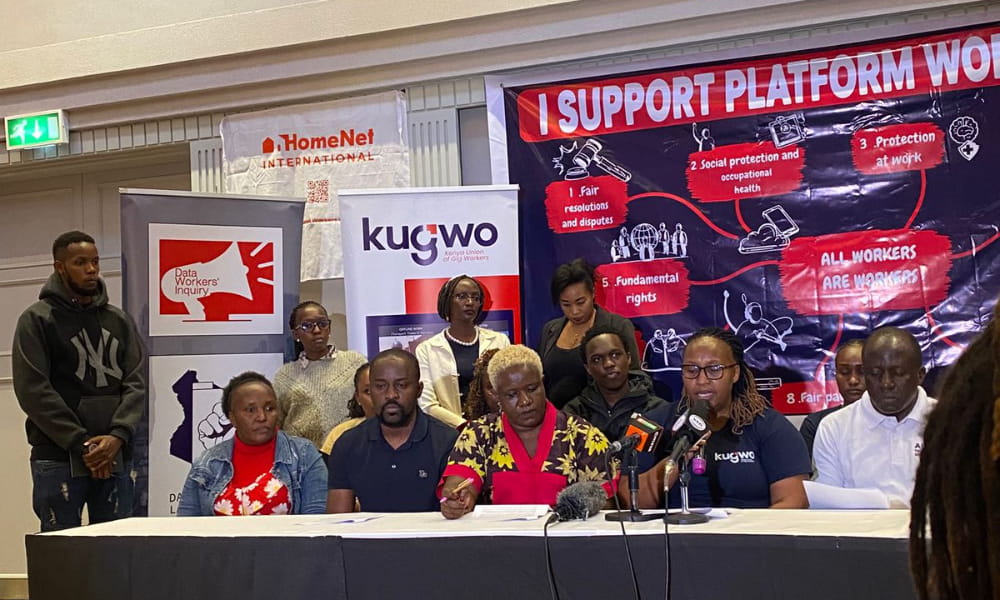
- A journalists’ roundtable and press conference held on 2 June 2026
- Media engagement opportunities to amplify worker perspectives
- Digital security training and mental health support for advocates on 26 May 2026
Engaging media and shaping public discourse
On 2 June 2026, journalists and media professionals were invited to a roundtable discussion with platform workers during Platform Workers Week, which ran from 25 May 2026. The purpose of the session was to provide context on the lived realities of platform workers and to inform media coverage ahead of the press conference.
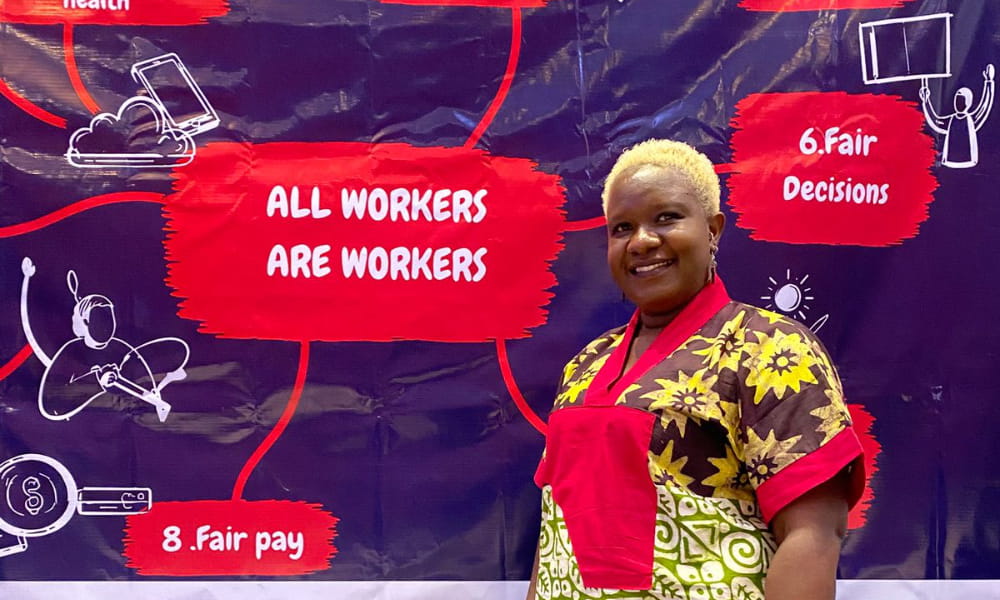
The media campaign was anchored in a set of worker-led demands that guided both advocacy and messaging:
- All workers are workers
- All workers deserve fundamental rights
- All workers must be protected at work
- All workers deserve fair decisions even when made by algorithms
- All workers must be protected from unfair deactivations
- All workers deserve fair pay
- All workers deserve rest
- All workers deserve social protection and occupational health
- All workers deserve fair resolution of disputes.
These demands were reinforced through dialogue during the roundtable, where key thematic issues such as algorithmic management, precarity, and access to justice were discussed in depth.
A joint call for decent work in the platform economy
The roundtable concluded with a joint press statement calling for the adoption of a Convention on Decent Work in the Platform Economy. A petition was also launched to build broader support for the campaign and strengthen ongoing advocacy efforts led by workers’ organizations.
From HNI’s perspective, the Nairobi convening contributed to strengthening global coordination among platform workers and allies, while ensuring that home-based workers were included in emerging policy conversations. The process marked an important step toward more inclusive global labour standards that reflected the realities of all workers in the digital economy.
——————————————–
Media Coverage
- Kenyan platform workers push for global labour protections at Geneva conference
- The Invisible Workforce Behind Your Daily Clicks: Kenyan Platform Workers Demand Fair Treatment