

By Edileuza Guimarães
The resumption of the Parliamentary Front in Defence of the Rights of Informal Economy Workers, in Brasília since September last year, brings back into public debate a structural issue for Brazil: guaranteeing rights for workers in the informal economy.
After a period of limited activity, the Parliamentary Front is reorganizing and is expected to convene a public hearing as early as May, focusing on expanding rights for these workers. The initiative represents an important step forward, but it comes amid a context of limited political time and institutional uncertainty.
The Parliamentary Front aims to monitor and improve federal legislation related to informal work, while also promoting new regulations in areas that remain outside existing legal frameworks. At the heart of this debate is the implementation of ILO Recommendation No. 204, adopted in 2015 during the International Labour Conference, which guides countries in promoting a just transition from the informal to the formal economy, ensuring rights, social protection, and respect for existing economic dynamics.
With elections approaching, the legislative window for action is likely to close during the first half of the year, creating urgency around the issues under discussion. The possibility of discontinuity is also a concern. If Congresswoman Fernanda Melchionna, the current Chair of the Front, is not re-elected, or if the current political coalition is not maintained, it will be necessary to rebuild this space from 2027 onward, including a new process of parliamentary endorsement. This risk reinforces the need to consolidate, from now on, a robust agenda grounded in social movements and grassroots realities.
In Brazil, this discussion is urgent. Recent data from the Continuous National Household Sample Survey (PNAD Contínua) show that the informality rate reached its lowest level since the period ending in July 2020 during the November 2025 to January 2026 quarter: 37.5%, equivalent to 38.5 million workers in informal employment. Even so, this means that approximately one in every three Brazilian workers remains in the informal economy—an expressive number that highlights the persistence of inequality and lack of protection in the labour market.
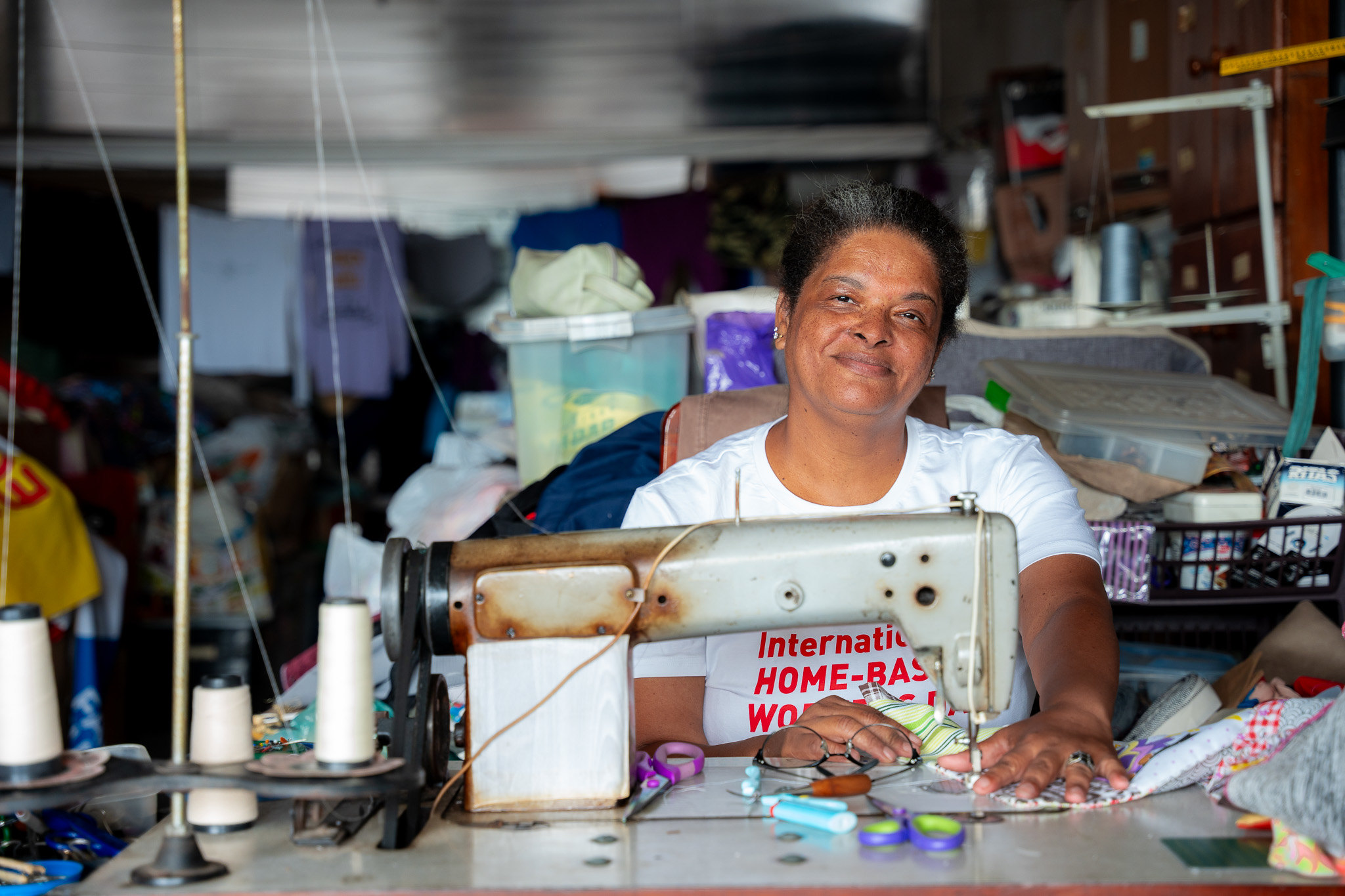
It is within this context that strengthening the Parliamentary Front becomes strategic. Beyond its role in Congress, the Front can serve as a bridge between public institutions and grassroots organizations, expanding dialogue with those who experience the realities of informality firsthand. Structured around a collective body composed of representative organizations from different sectors of the informal economy—including home-based workers who produce goods and/or provide services from their own homes, often as part of larger supply chains without formal employment relationships or social protection, as well as domestic workers, waste pickers, street vendors, recyclers, and platform workers—the Front reflects the breadth and complexity of informal work in Brazil.
Among its priority issues are the recognition and strengthening of informal work, as well as the development of policies that guarantee rights and social protection for these workers. This is an essential step toward addressing historic inequalities and promoting productive inclusion with dignity.
At the same time, Brazil’s recent political landscape reveals additional obstacles. Growing tensions within the legislative environment and the spread of misinformation in public debate make it more difficult to build consensus and directly affect the advancement of social agendas. In this context, progress depends on political coordination, social mobilization, and institutional commitment—roles that the Parliamentary Front can and must fulfil.
The informal economy is not peripheral: it lies at the heart of Brazil’s economic dynamics.
Edileuza Guimarães is a member of the Executive Committee of HomeNet International, President of the Association of Home-Based Workers in the Solidarity Economy (ATEMDO), and a member of Intersetorial Brasil, which is part of the Parliamentary Front in Defence of the Rights of Informal Economy Workers.
Editor’s note: This article is an English translation of the original piece published in Portuguese by Le Monde Diplomatique Brasil. Read the original article here.
