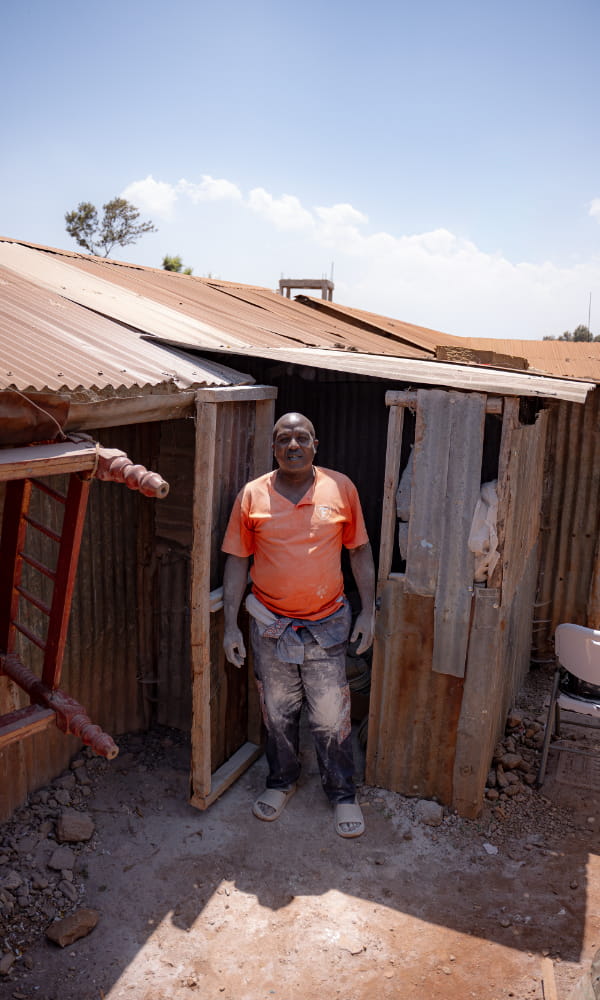


By half past six most mornings, Evans is already in his seat. He wakes between 5:30 and 6, takes a shower, and comes straight out to the spot where he works, at the home in Nairobi that doubles as his workshop. He keeps a lamp beside him so that the hours before sunrise are no obstacle. Then he decides what the day will be.
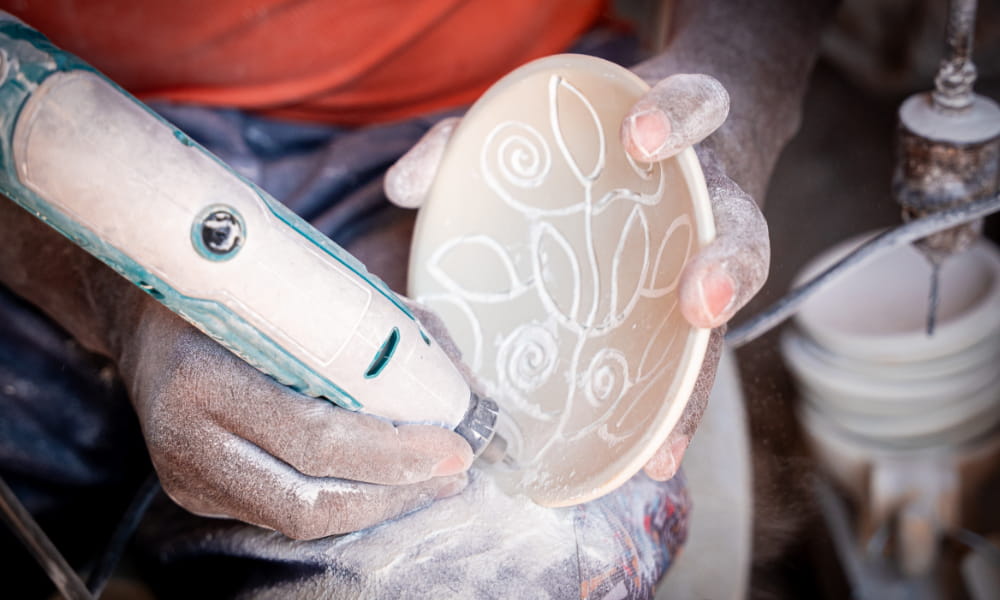
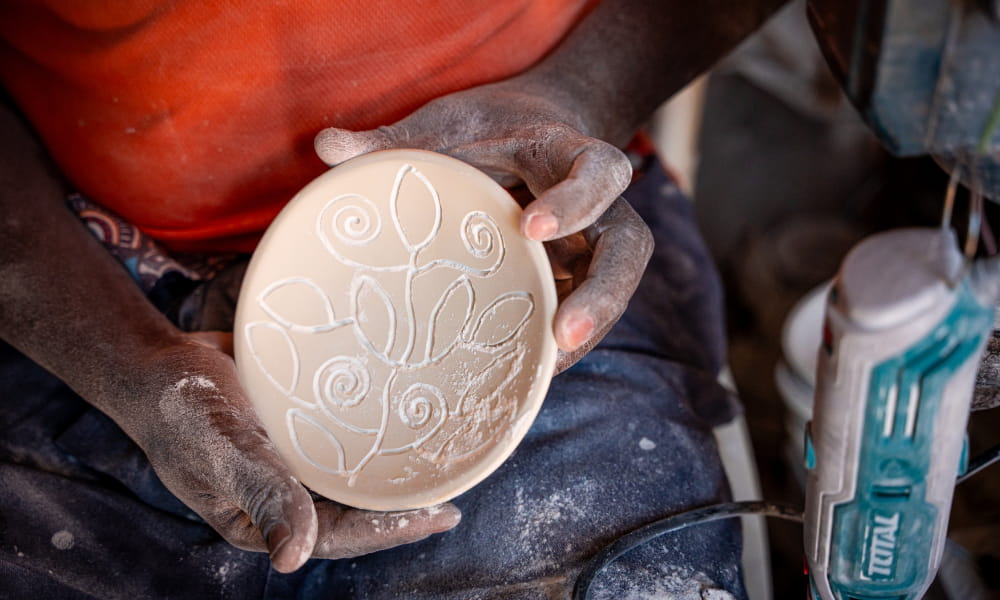
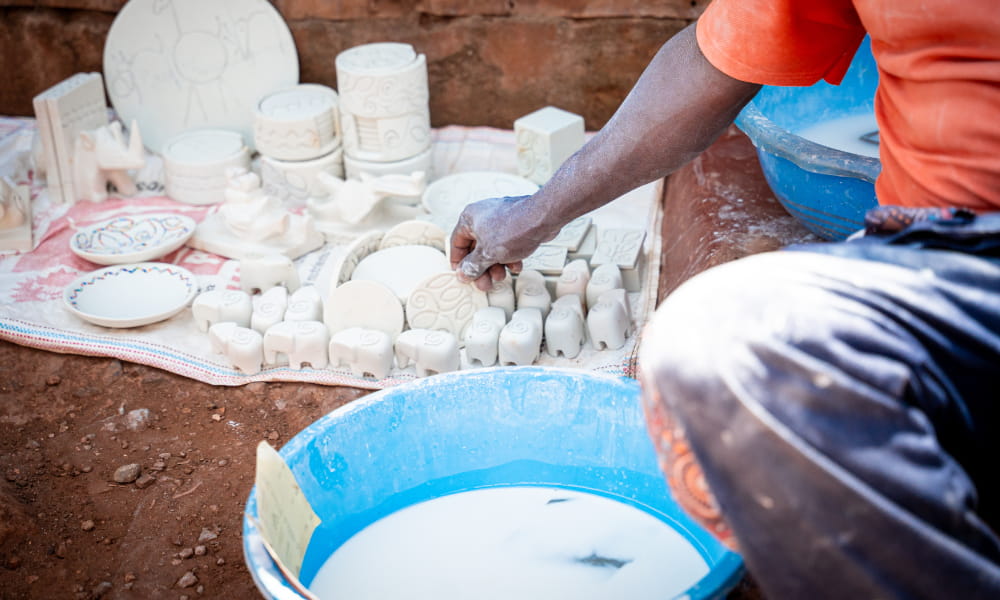
If the day calls for bowls, it begins with a pencil. Evans sketches the pattern he wants directly onto the piece, and only when the drawing satisfies him does he pick up the engraving tool that turns the sketch into something permanent. “Basically, these two, they are my workshop of production,” he says, without irony. Once the carving is finished, the work is not over: he polishes each piece with sandpaper and water until the surface is smooth, then sets it out to dry before it can be sold. Some pieces call for one more step — beads, added one by one, to finish the design. There is no factory floor here, no staff room, no machinery beyond what fits in his hands. There is a man, a light, a pencil, a blade, and a chair he will barely leave for the next fourteen hours.
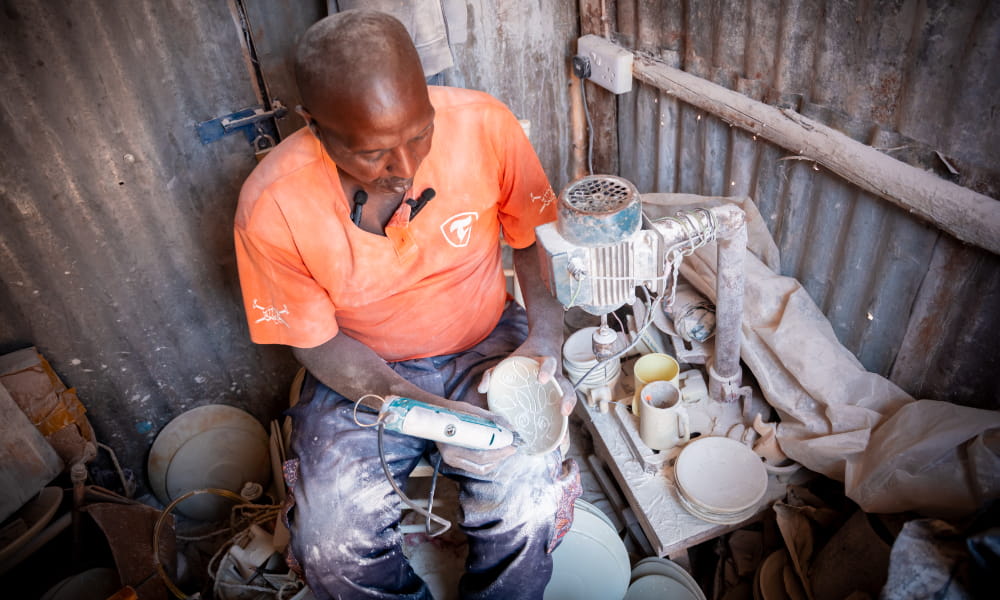
On production days he works from 6:30 until 8, stops half an hour for breakfast, sits again until lunch, returns until around 6 in the evening, rests a few minutes, and then carries on until 8 or 9 at night. He does this on Mondays and Tuesdays, the two days each week he sets aside for making things. Wednesday through Sunday belong to selling them. Wednesdays and Thursdays he is at the Sarit Centre; Fridays at Village Market; Sundays at Yaya Centre — a circuit of Nairobi’s shopping centres that he has held down with remarkable consistency. Last week, when he travelled to Kisii, the stall did not close; a woman who works with him kept it running until he came back. Saturday is the one day the rhythm breaks entirely. Evans is a Sabbatarian, and on the Sabbath he does not work at all.
The discipline is not incidental. Selling in several markets, he explains, means every piece has to hold up against everything around it. Plenty of people sell similar things, and the moment a maker loses the touch, the business is finished. What he wants is for a customer to look across a crowded stall and feel the pull of his work before he has said a word. He is deliberate about this. He does not call out to shoppers or trail them the way some vendors do. “My products can call you,” he says. “I place my products in the right way, produce the best quality, they will call you on my behalf.”
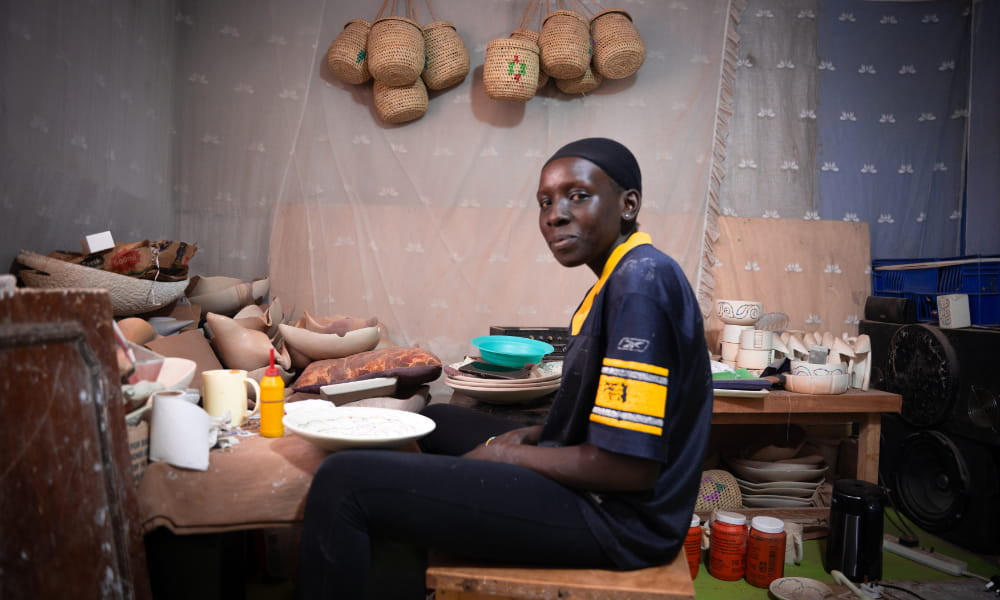
The pieces at his stall do double duty: they sell, and they serve as samples. Customers who see his bowls come back with orders — plates, pen cups, mugs, even chair sets, things they describe and he figures out how to make. Ninety percent of the time, he says, the commission comes out exactly as asked. The orders he prizes most come from wholesalers, who might take ten plates, twenty pen cups and forty mugs in a single purchase, putting 100,000 or 200,000 shillings in his hands at once — a lump sum that selling two or three pieces at a time to walk-up customers can never match.

Evans has been doing this since the 1990s, and in all that time, he says, he has never received a coin, a training, or any support of any kind from his government. The gap is not only financial. Most home-based workers he knows were never taught to run a business at all; they trade the way one might exchange fifty shillings for seventy, managing by instinct. Hand such a person a grant, he argues, and managing the grant becomes its own problem. And then there is the question of where to sell. The Maasai market is there, but the competition is punishing, and a maker can end up laying goods out in the sun and, as he puts it, waiting for miracles.
Into that gap came HomeNet International. The first day Evans walked into one of the organization’s meetings, he was skeptical — what is HomeNet, he remembers thinking, and why HomeNet? — but he sat and listened. He has since attended several of HNI’s workshops, including one in Kibra last year, open sessions that ranged across finances, production, even how to dress for the market and how to approach potential customers. He used to carry small stock to the market, producing cautiously; the workshops persuaded him that the more he produced, the higher the returns. His unhurried, let-the-work-speak sales style was sharpened there too.
Through HomeNet, Evans came to see his one-man workshop as part of something much larger: a network of home-based workers stretching to Thailand and Brazil, facing versions of the same struggles. Most of the difficulties he faces here, he came to understand, other people are facing somewhere else — it is not just Kenya. The workshops also left him with a conviction he now states like a business principle: you can’t grow safely while everyone around you stays stuck. If you rise while everyone around you stays poor, he reasons, they will depend on you or steal from you. “You grow when you grow and you make others grow,” he says. “It becomes easy on your life.”
For now, the alarm still goes off before six, and the two production days still stretch past dark. But Evans is clear about where the long hours are pointed. He wants a curio shop of his own. And he wants, once in his life, to stand at a market far from Kenya — Brazil, maybe, or Canada, or America — exhibiting his own work, hearing directly what customers there make of it. That, he says, would be a dream come true. Until then, there is tomorrow’s pattern to sketch, a blade to sharpen, and a chair by the lamp, waiting in the dark before sunrise.