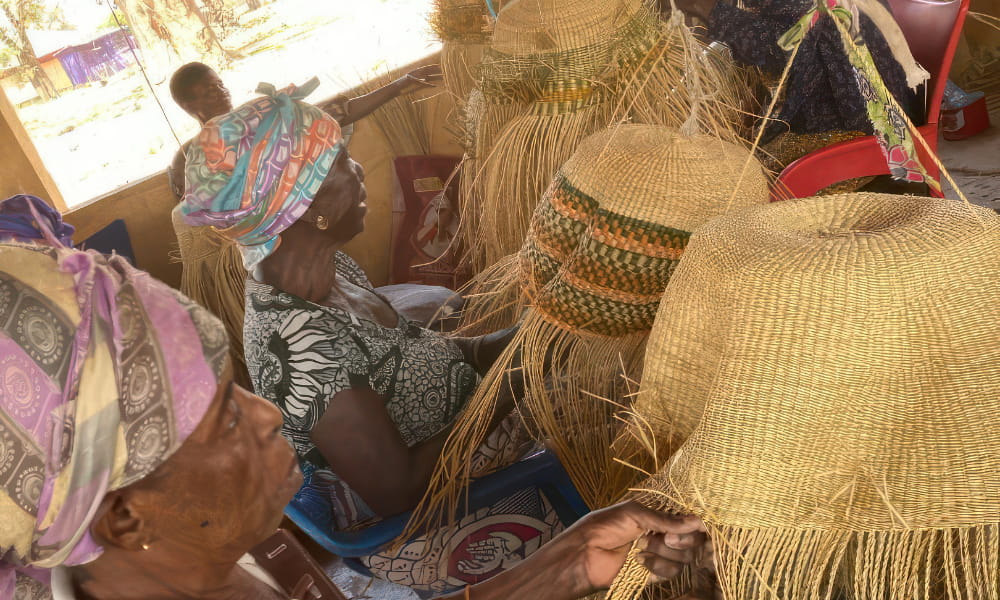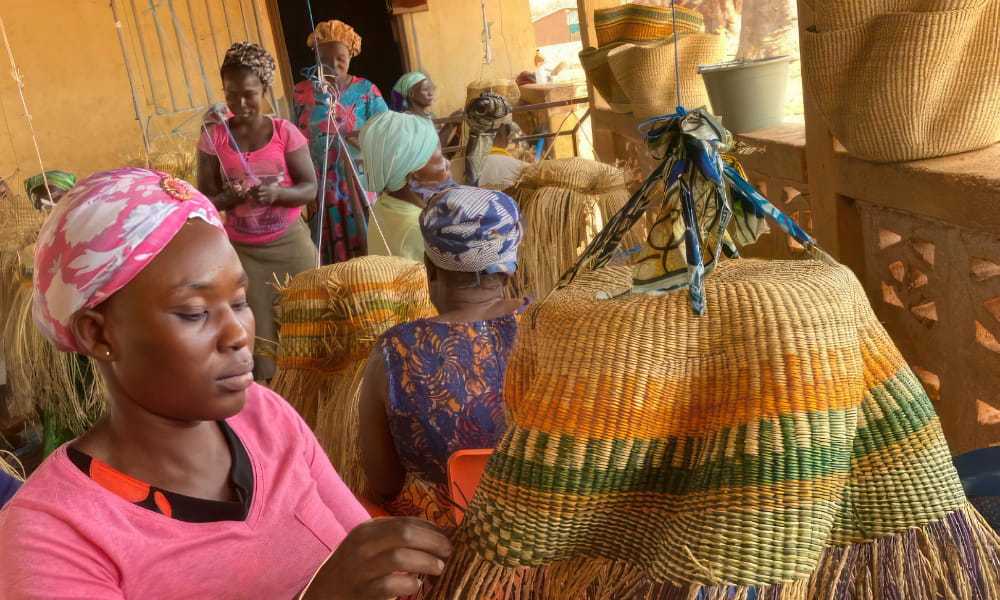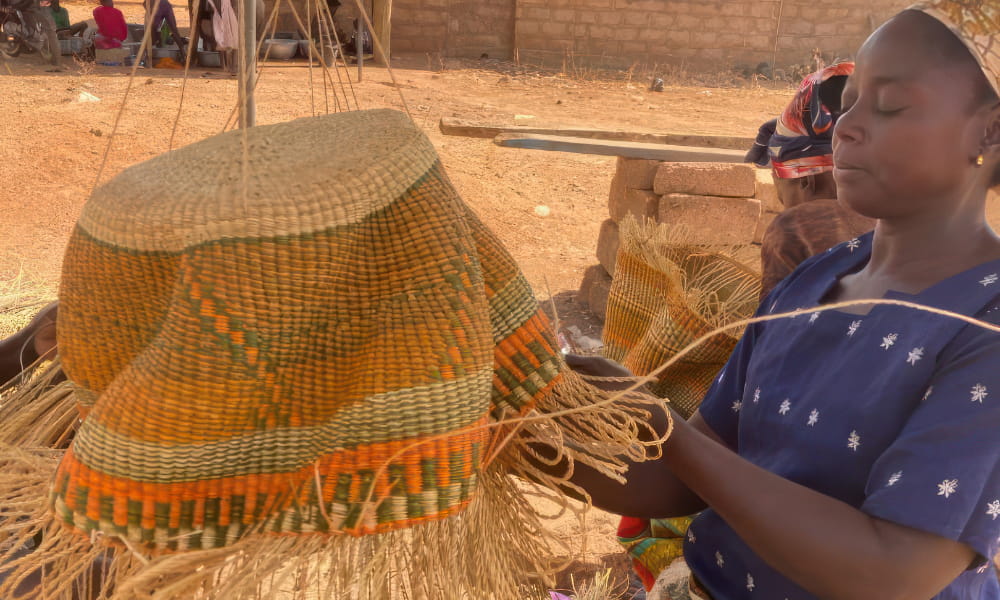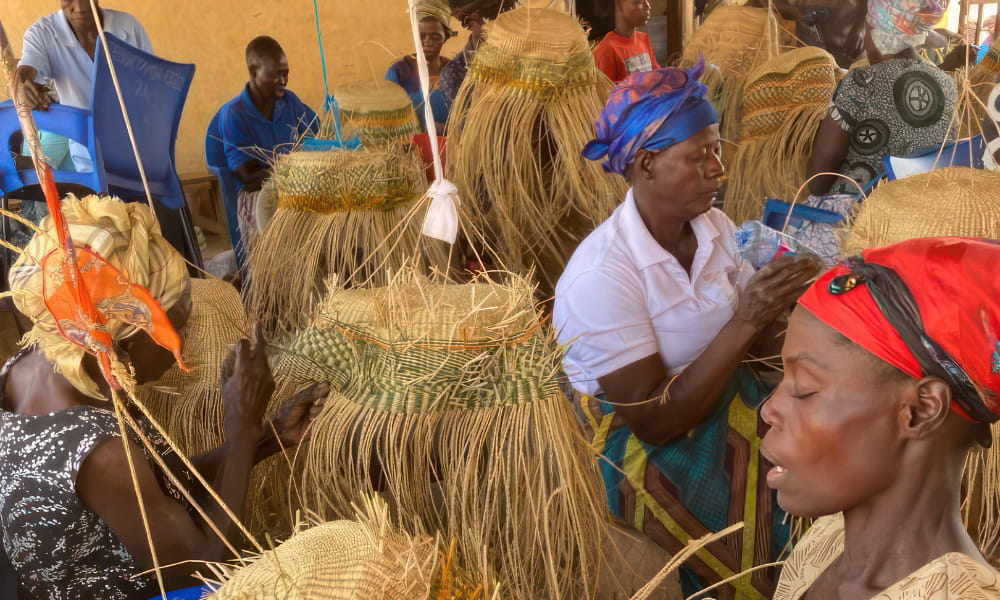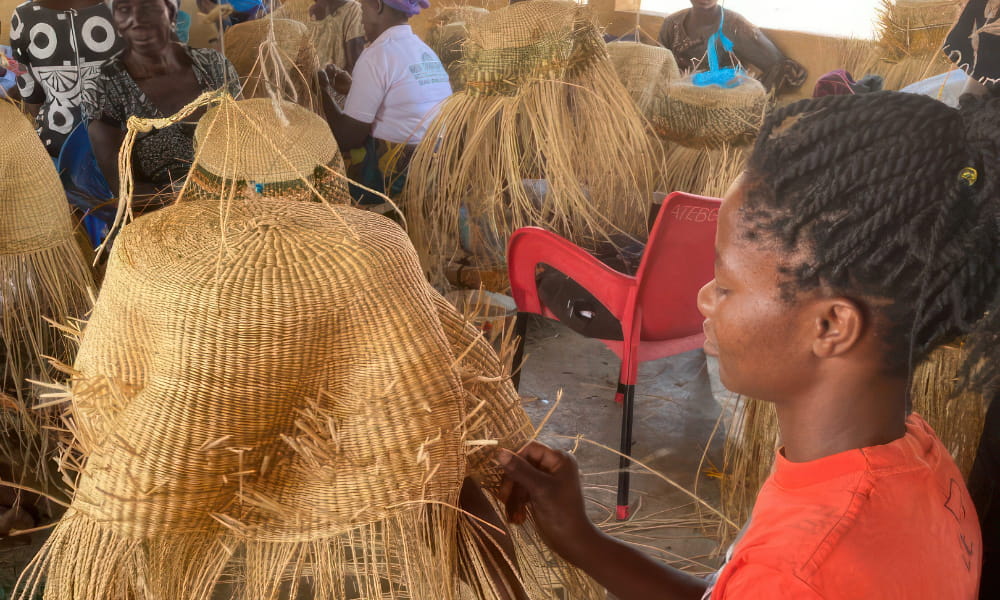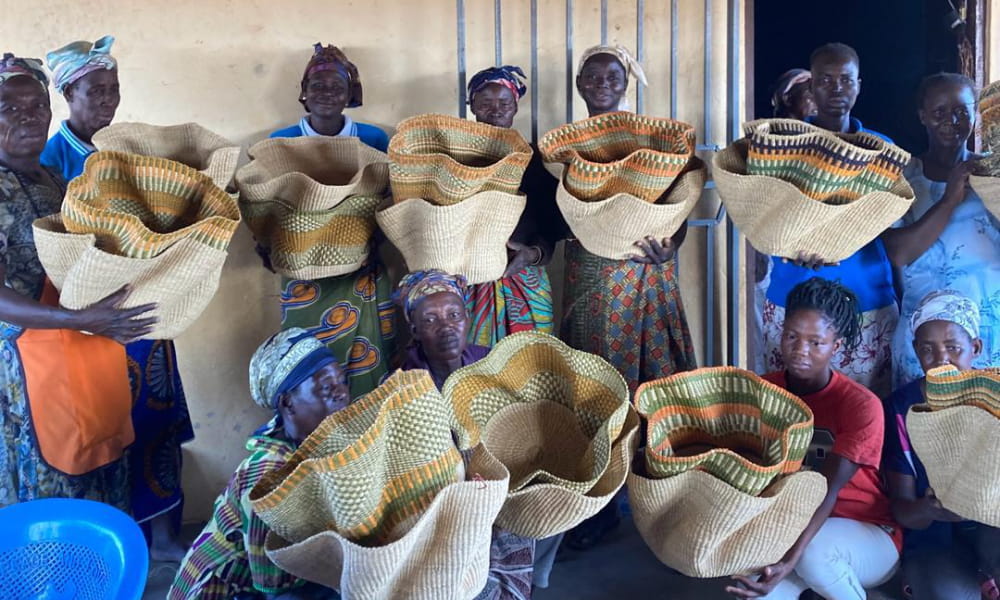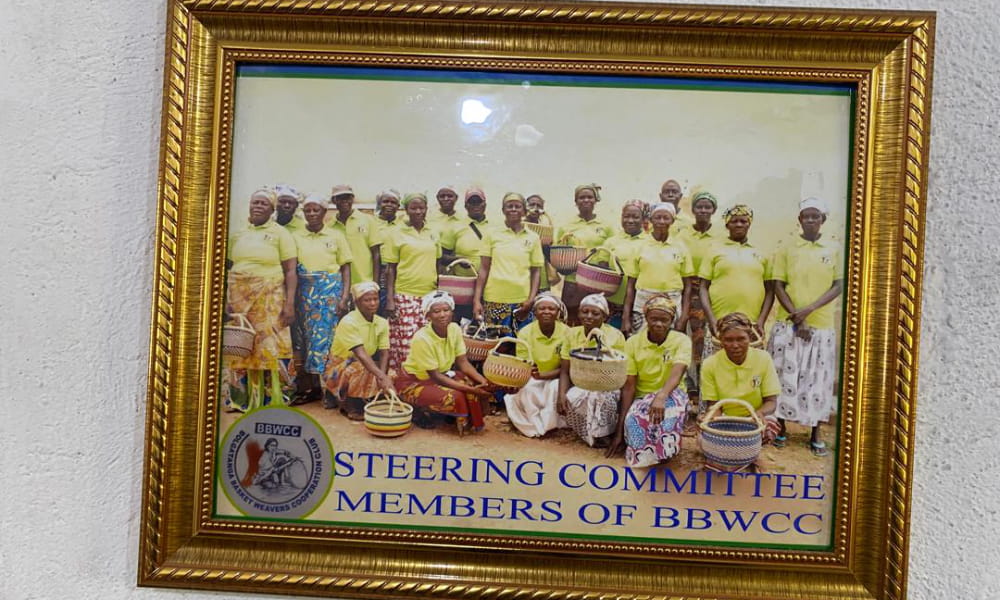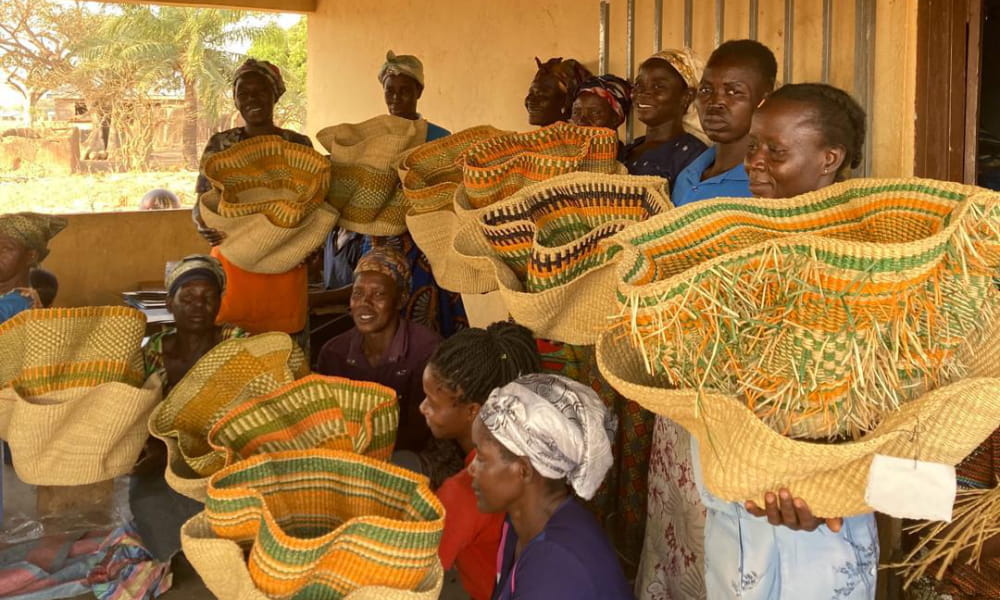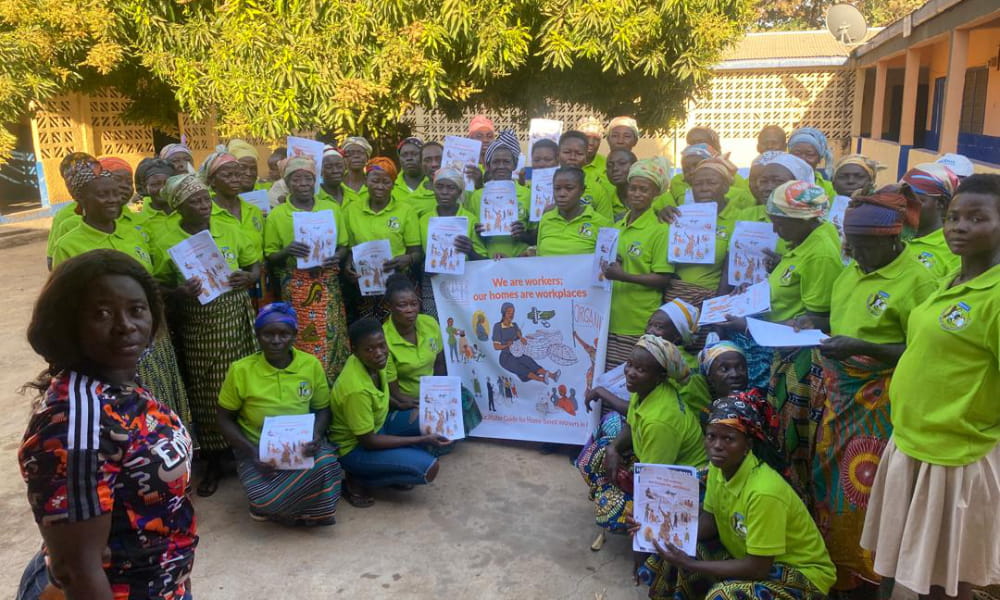

HomeNet Africa, in partnership with the African Platform for Social Protection (APSP), supported the Bolgatanga Basket Weavers Association to carry out a study conducted in Ghana’s Upper East Region that highlighted the critical role played by home-based workers in supporting household livelihoods and local economies, while exposing significant gaps in social protection and digital inclusion. The research examined the experiences of home-based workers through the lens of the International Labour Organization’s Convention No. 177 on Home Work.
Home-based workers, including basket weavers, smock weavers, tailors, shea butter processors, and other small-scale producers, form an important part of Ghana’s informal economy, which accounts for nearly 80 percent of national employment. For many families, particularly female-headed households, home-based work is the primary source of income used to pay school fees, purchase food, and meet everyday needs. Despite their contribution, these workers remain largely invisible within labour laws, social protection programmes, and national development policies.
The study highlighted the following:
Home-based workers face significant economic insecurity. Most operate without employment contracts, pensions, maternity protection, occupational safety coverage, or unemployment benefits. Income is directly linked to productivity, meaning illness, caregiving responsibilities, or economic shocks can immediately threaten household welfare.
Digitalisation is creating new opportunities for workers through mobile phones, mobile money services, and social media platforms. These technologies are helping workers communicate with customers, receive payments, access government services, and market products beyond their local communities. Mobile money, in particular, has become a valuable tool for financial inclusion and benefit delivery. However, the benefits of digitalisation are not equally shared. Low literacy levels, limited smartphone ownership, poor network connectivity, high data costs, and inadequate digital skills continue to exclude many workers from fully participating in the digital economy. Women and older workers face the greatest challenges due to lower access to education, technology, and training opportunities. Many rely on family members to navigate digital systems, increasing their vulnerability to fraud and misinformation.
The research also identified major gaps in Ghana’s social protection system. While programmes such as the National Health Insurance Scheme (NHIS) and the Livelihood Empowerment Against Poverty (LEAP) programme provide important support, there are currently no dedicated social protection schemes targeting home-based workers. Many vulnerable workers remain excluded due to targeting limitations, documentation requirements, and digital application barriers.
Another key finding is the lack of reliable data on home-based workers, making it difficult for policymakers to design targeted interventions and allocate resources effectively. This invisibility continues to limit recognition of their contribution to national development.
The study calls for urgent action on the following fronts:
To recognize, protect, and include home-based workers through stronger legal recognition, expanded social protection coverage, targeted digital literacy programmes, improved access to affordable technology, and better data systems.
It also recommends the ratification and implementation of ILO Convention No. 177 as a framework for promoting labour rights and social protection for home-based workers. As Ghana advances its digital transformation agenda, ensuring that home-based workers are not left behind will be essential for achieving inclusive development, decent work, and social justice for all.
Advocacy Message: Recognize, Protect and Include Home-Based Workers.