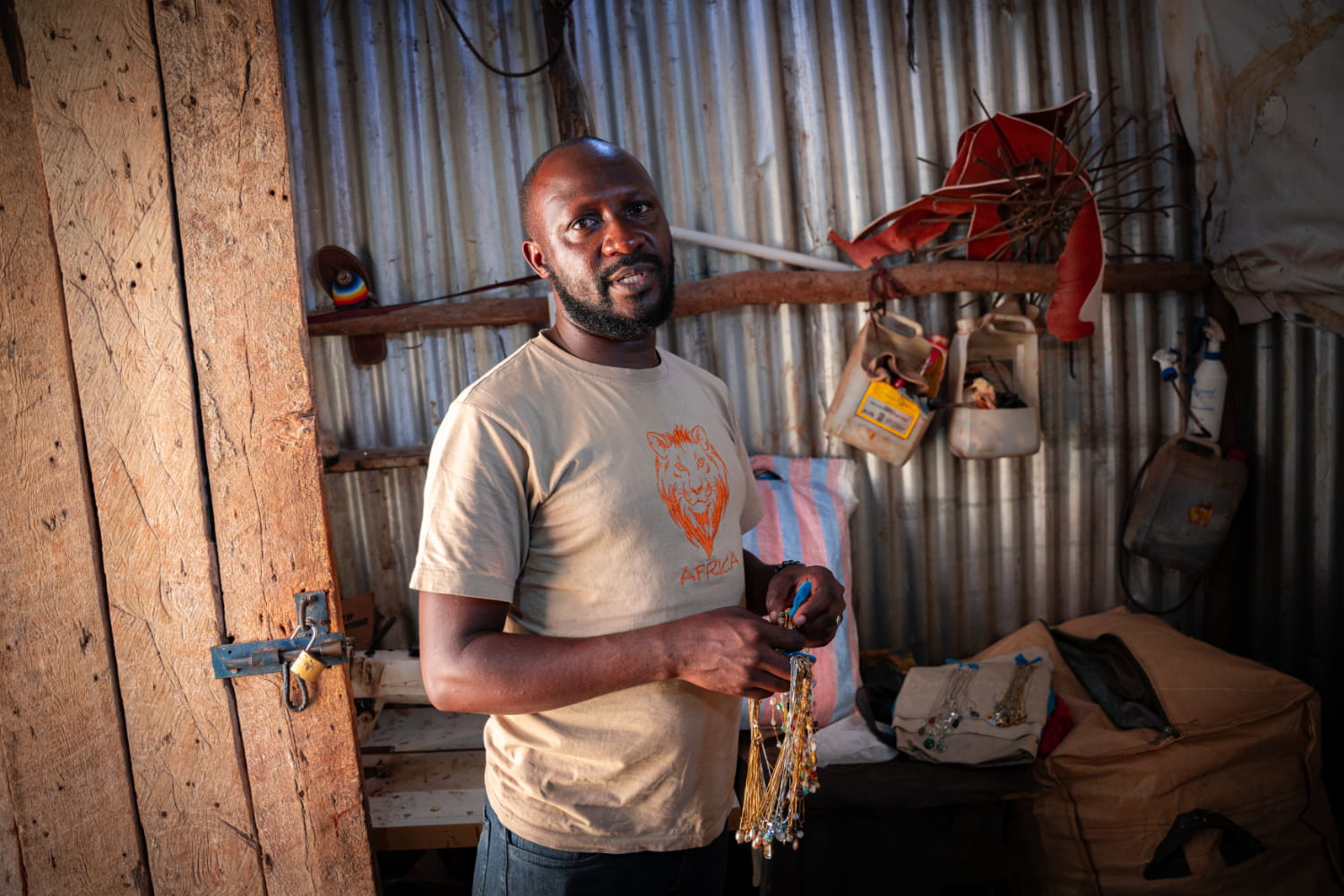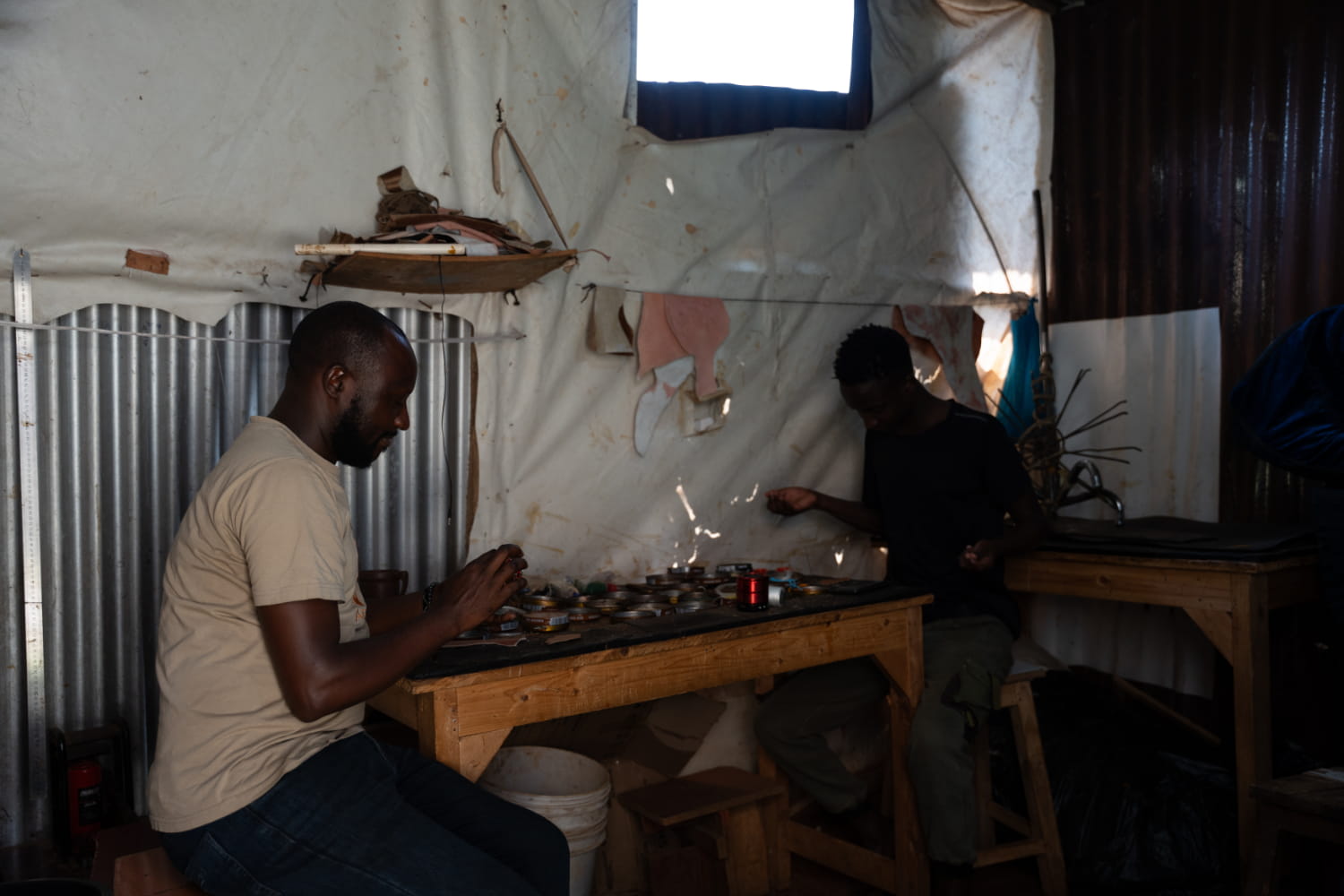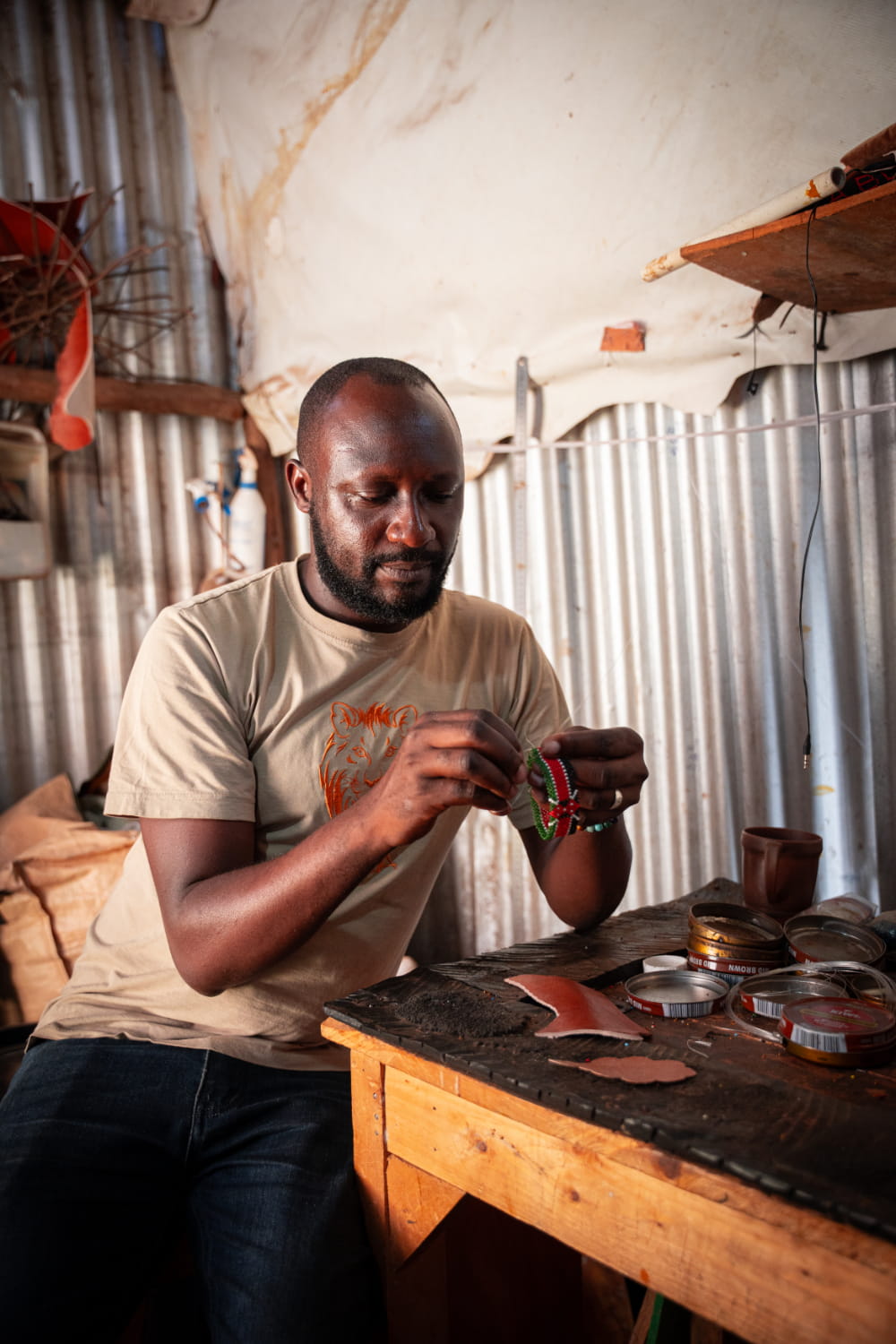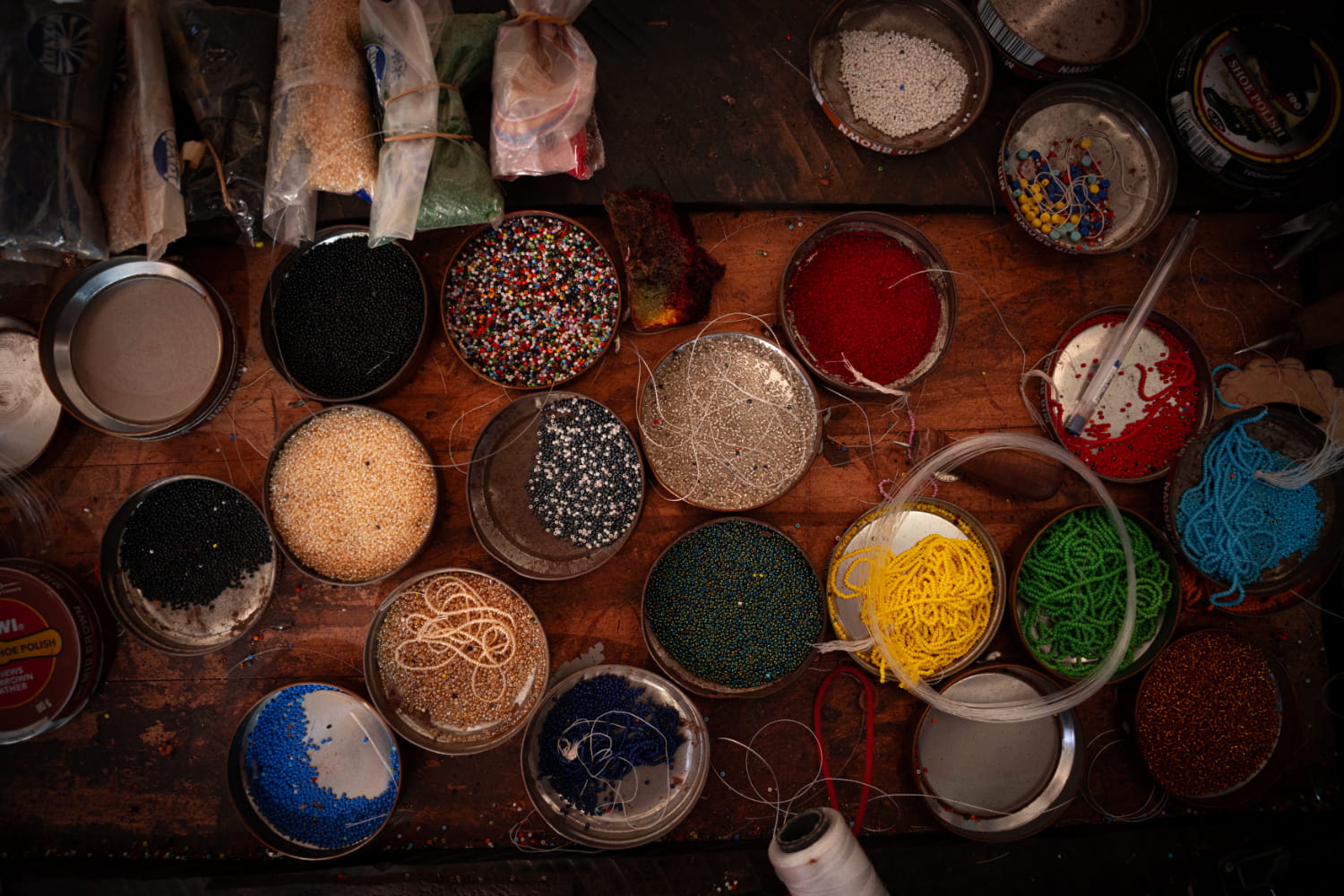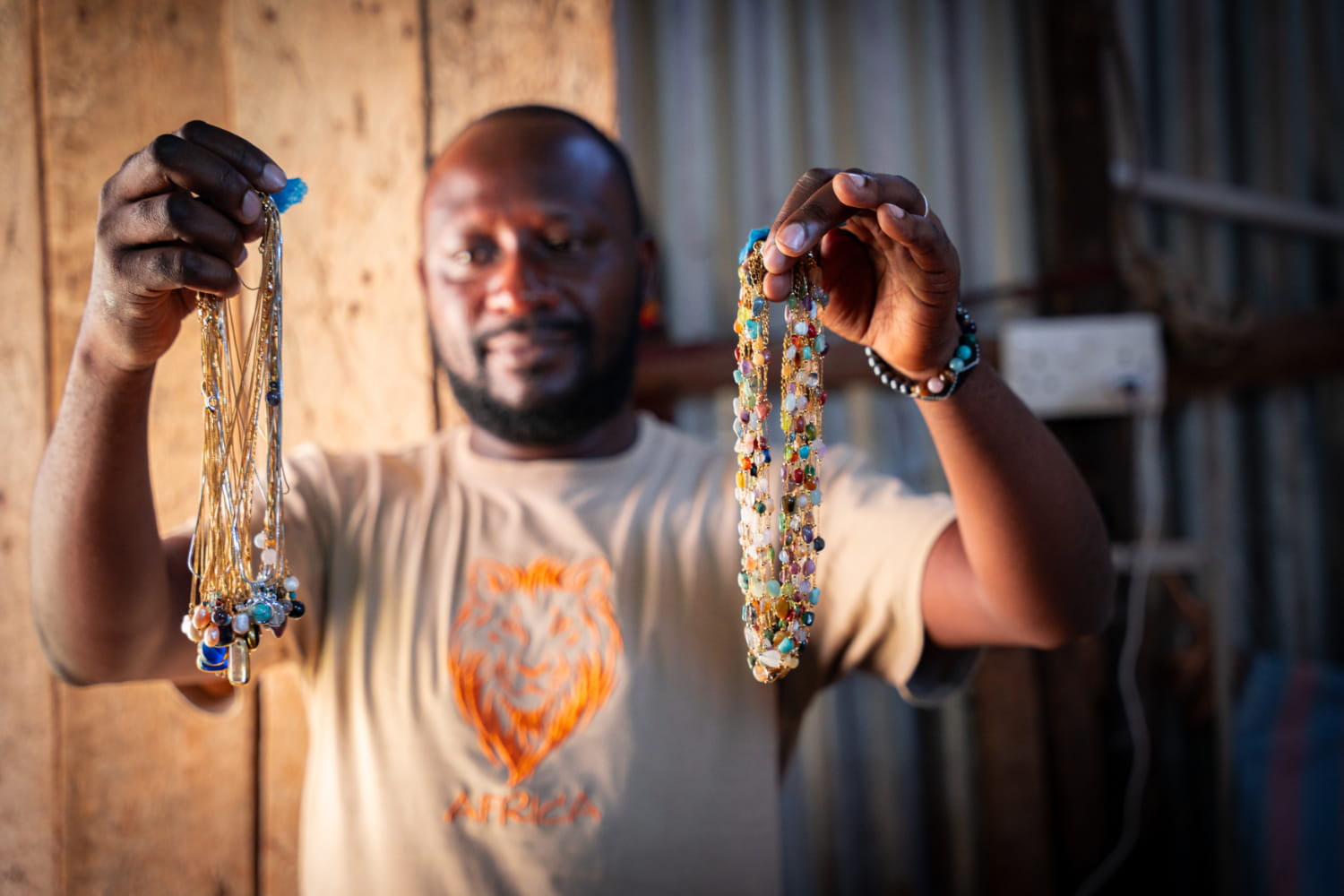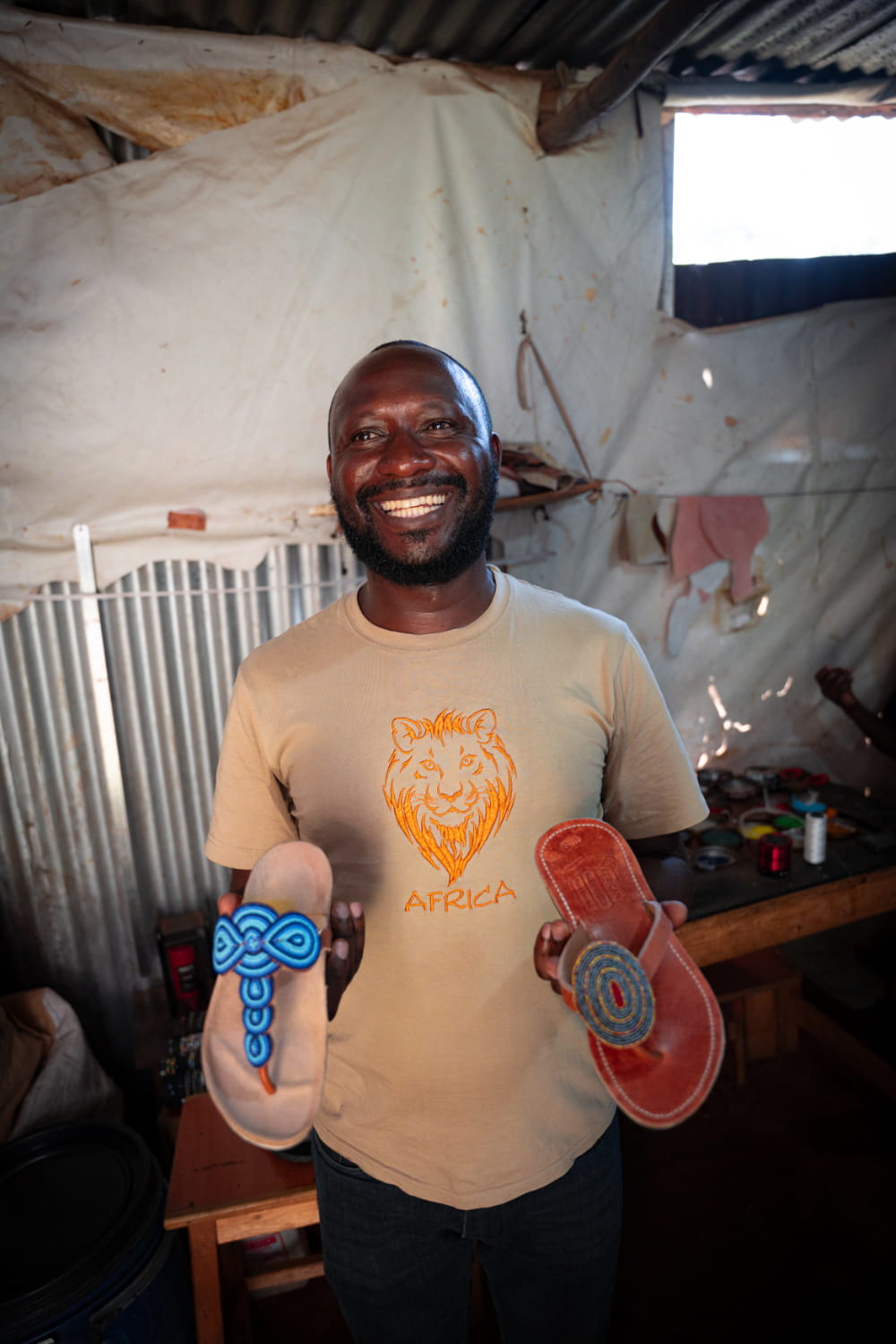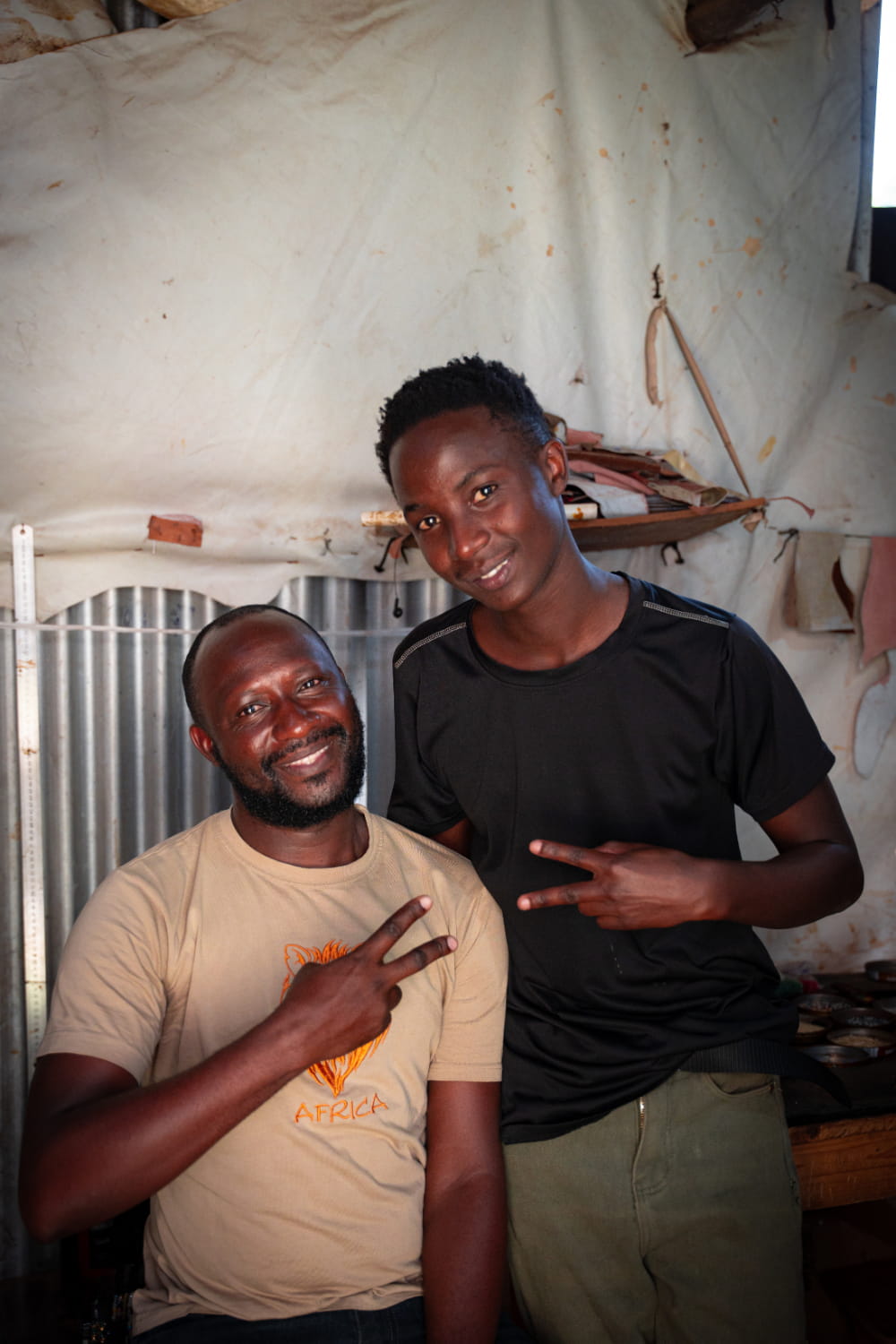

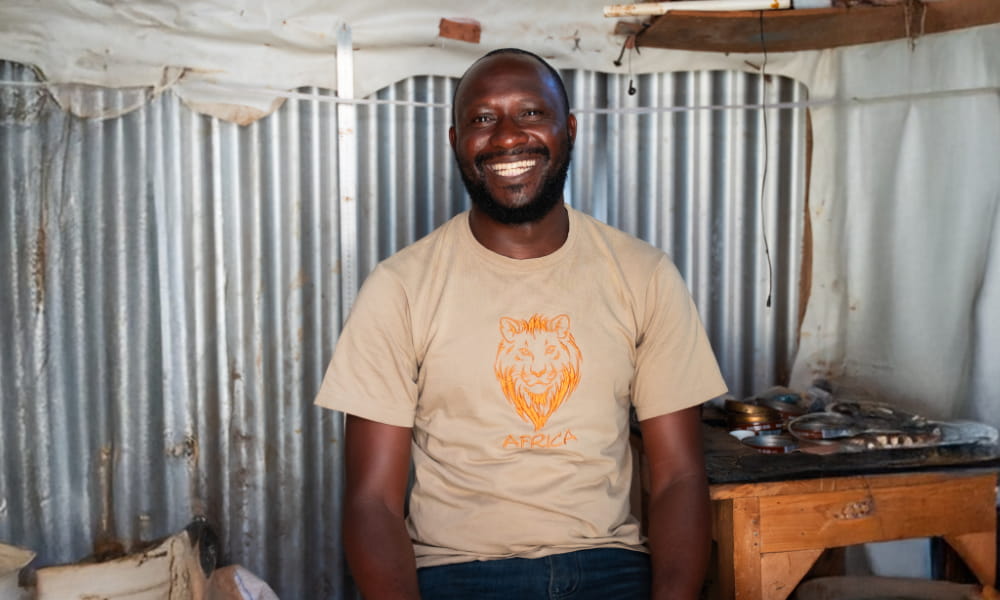
In a small shed in the outskirts of Nairobi, Wycliffe Okwara welcomed us into the space where he carries out his work. The structure is simple and functional, set away from the main road, and serves as the central point where different parts of his work come together.
Wycliffe is originally from Western Kenya but has built his life and work in Nairobi. He is married to Winnicaster, who is also a home-based worker in the same sector, and together they have a 13-year-old daughter, Tabitha. They have been working side by side for more than a decade, combining family life and income generation within the same informal economy.
His entry into the trade was not planned. After finishing school, he tried to find formal employment, submitting applications without success. In the meantime, he began helping his father, who was also an artisan and home-based worker. What started as a temporary solution gradually became permanent. “I decided, ‘Let me start by helping my dad as I wait for that opportunity.’ Then it never came,” he said. He has now been working in the sector since 2002. After his father passed away in 2016, Wycliffe took over the business and continues to run it under the same name his father chose: Mr. Happy & Cheap Curios.
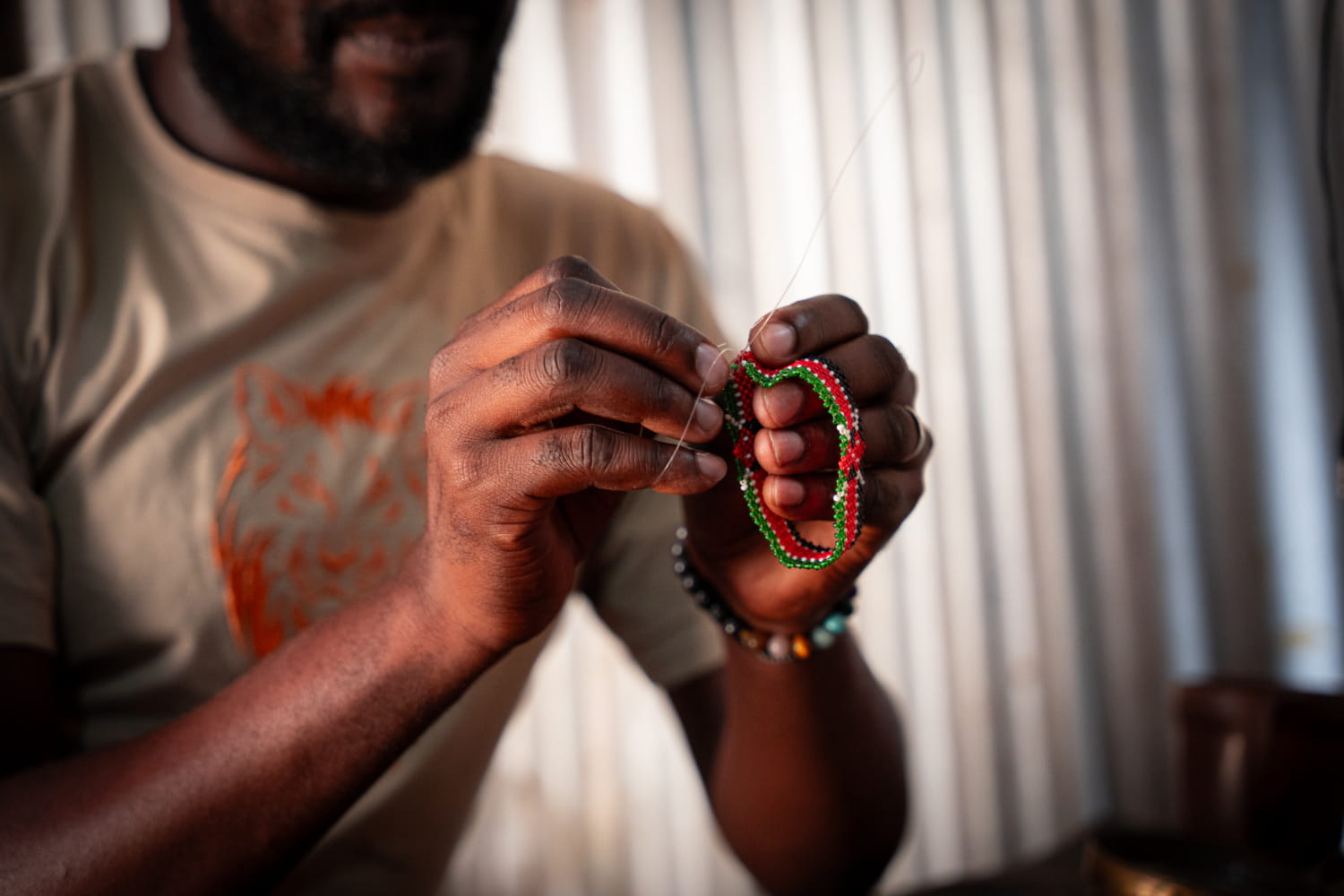
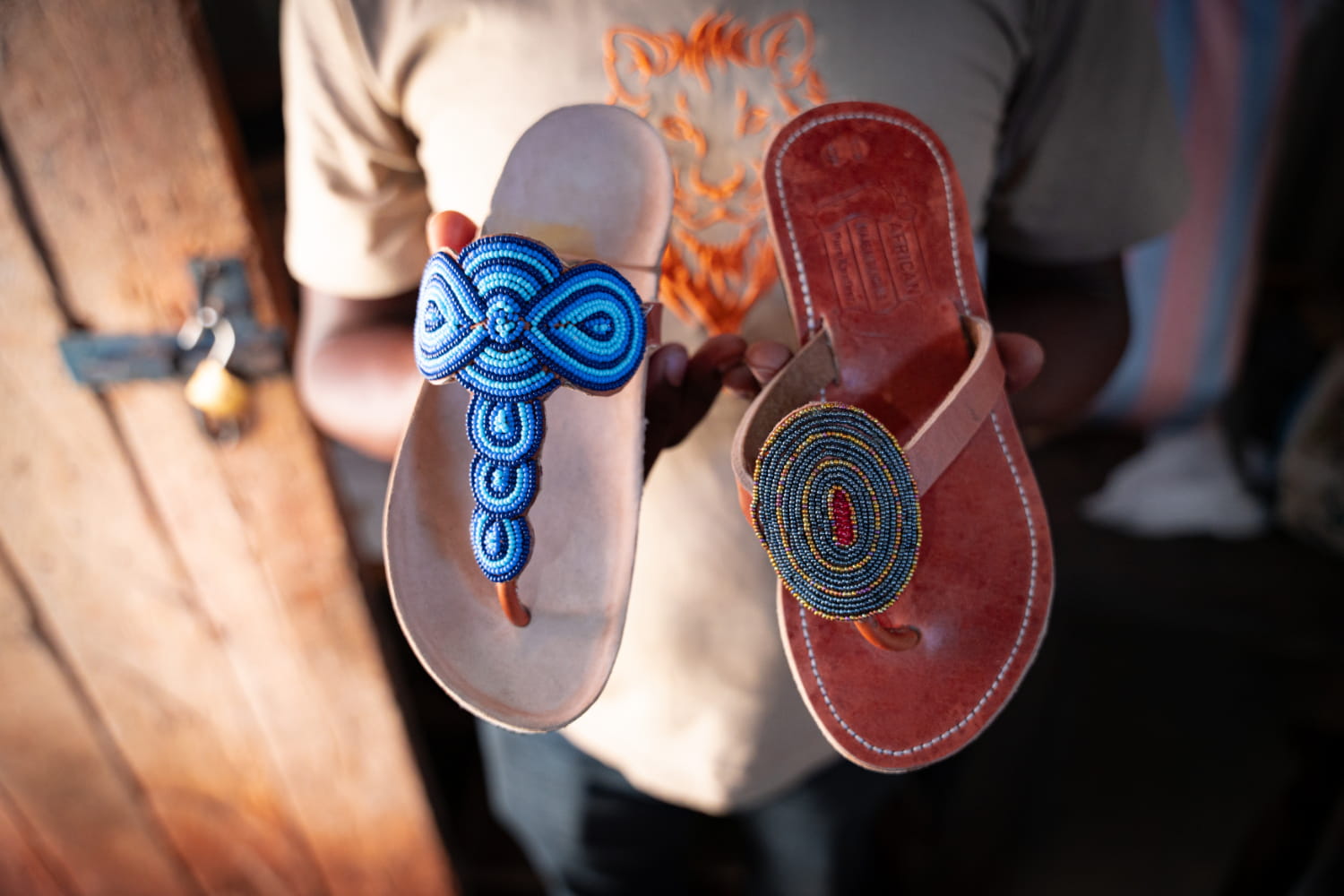
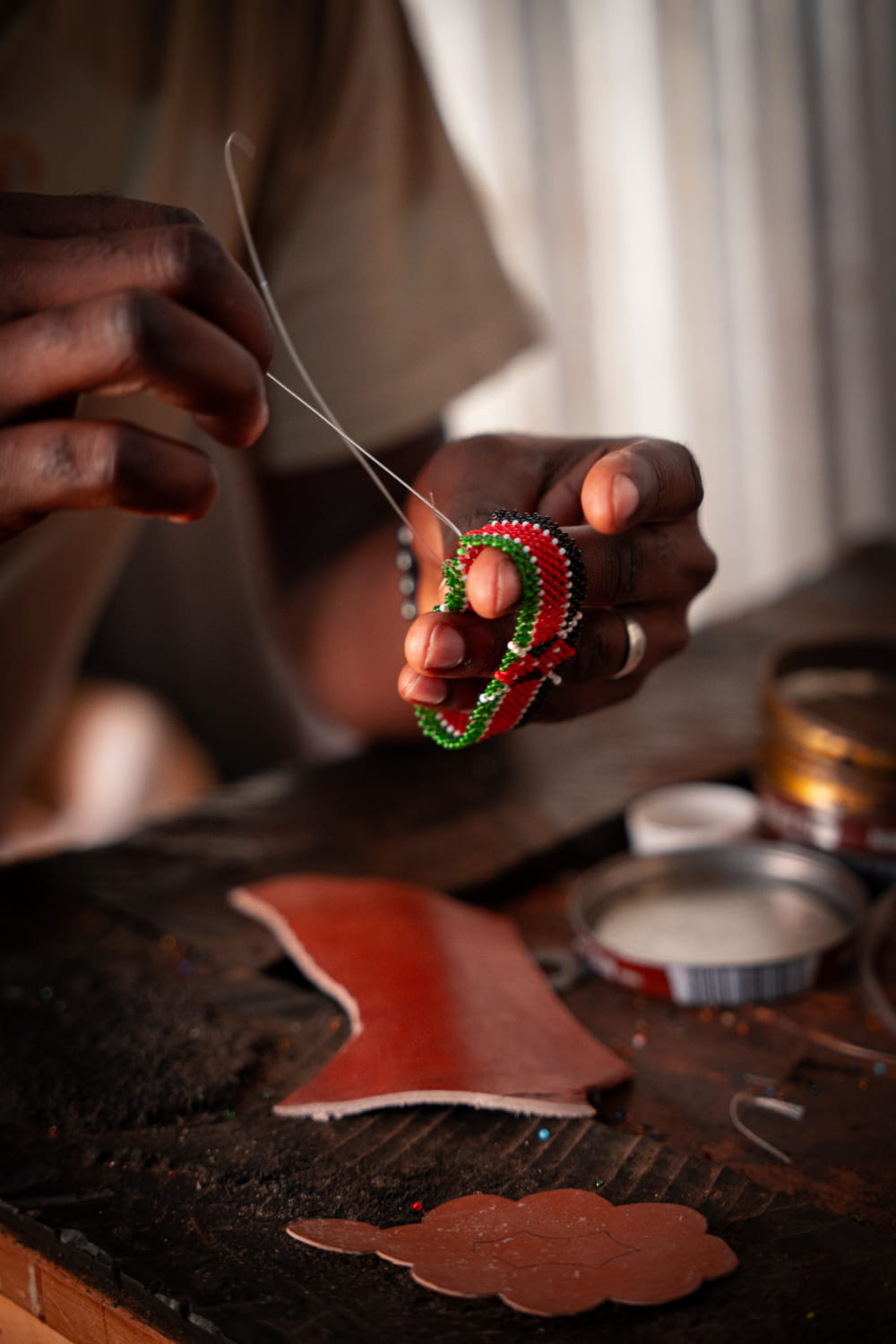
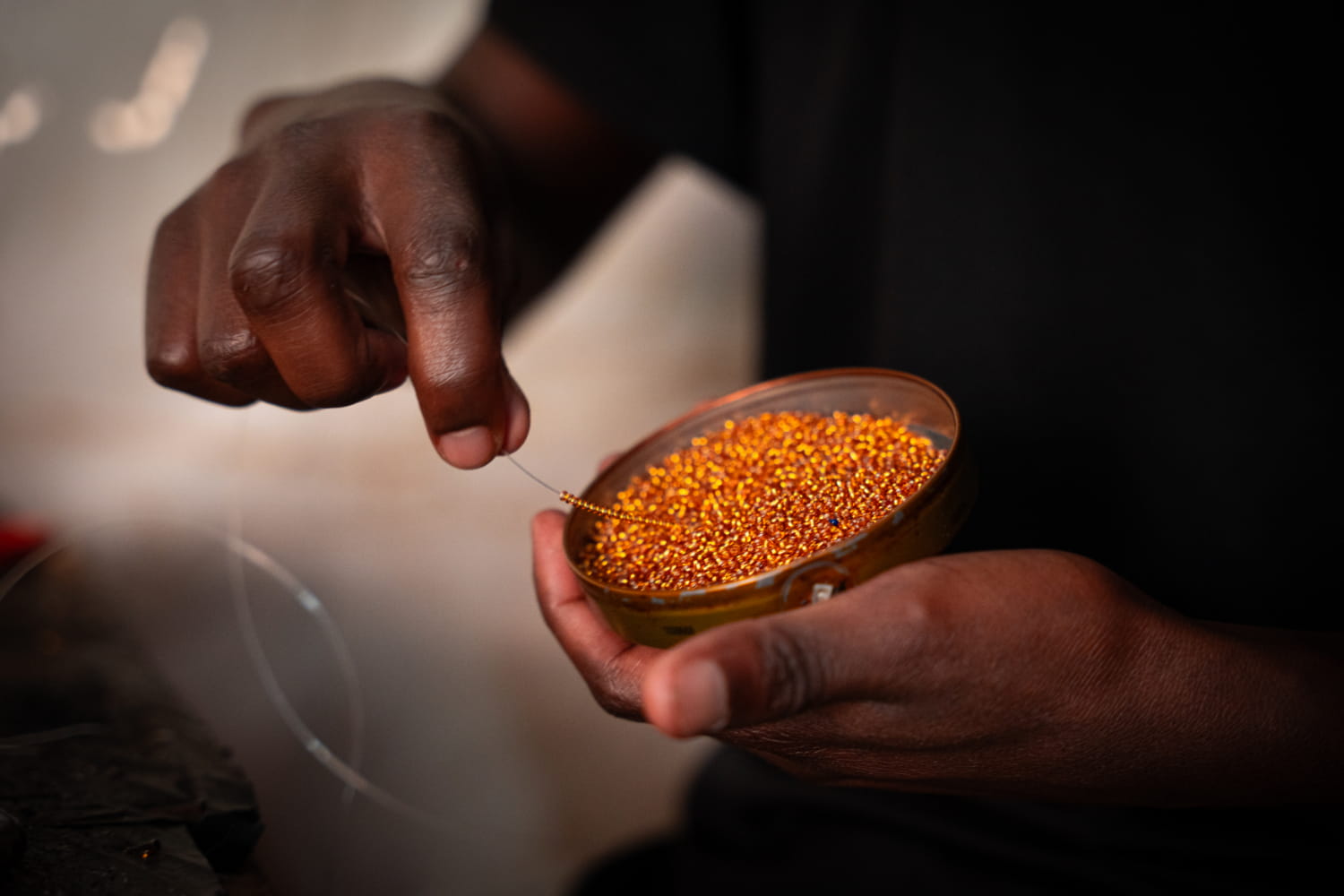
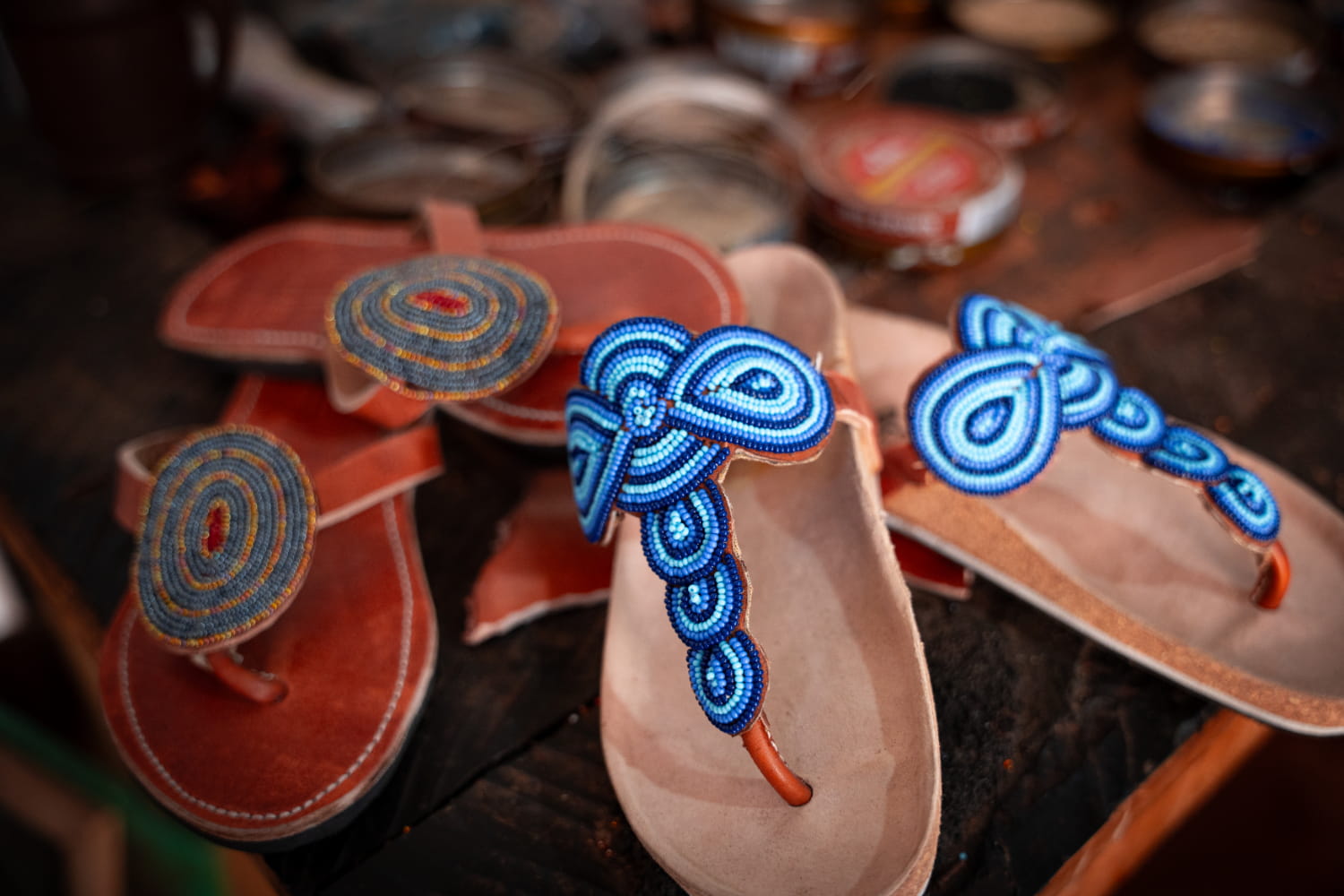
“The shoes are actually in bits. Everyone does their part, and then we bring everything together” Wycliffe explained.
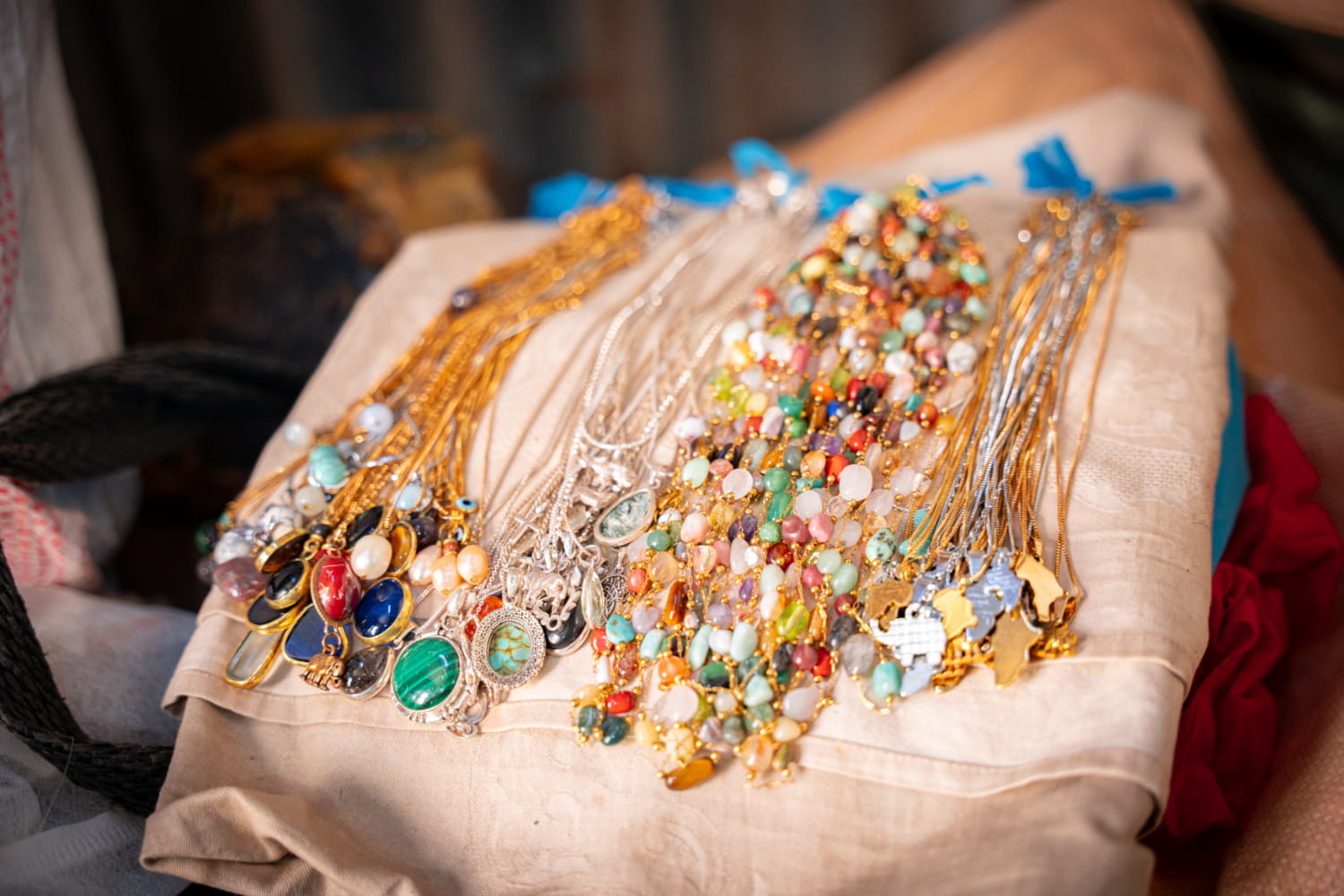
The group produces based on orders from wholesale buyers and for their own stock, which they sell directly to consumers. Wycliffe regularly takes products to Maasai markets, which are often held in parking areas of shopping malls. However, accessing these markets comes at a cost, as vendors must pay for space. For many workers, this is not always affordable.
“The first challenge is actually the markets for our products. Some people cannot afford the charges, so they just depend on someone who walks in,” he said.
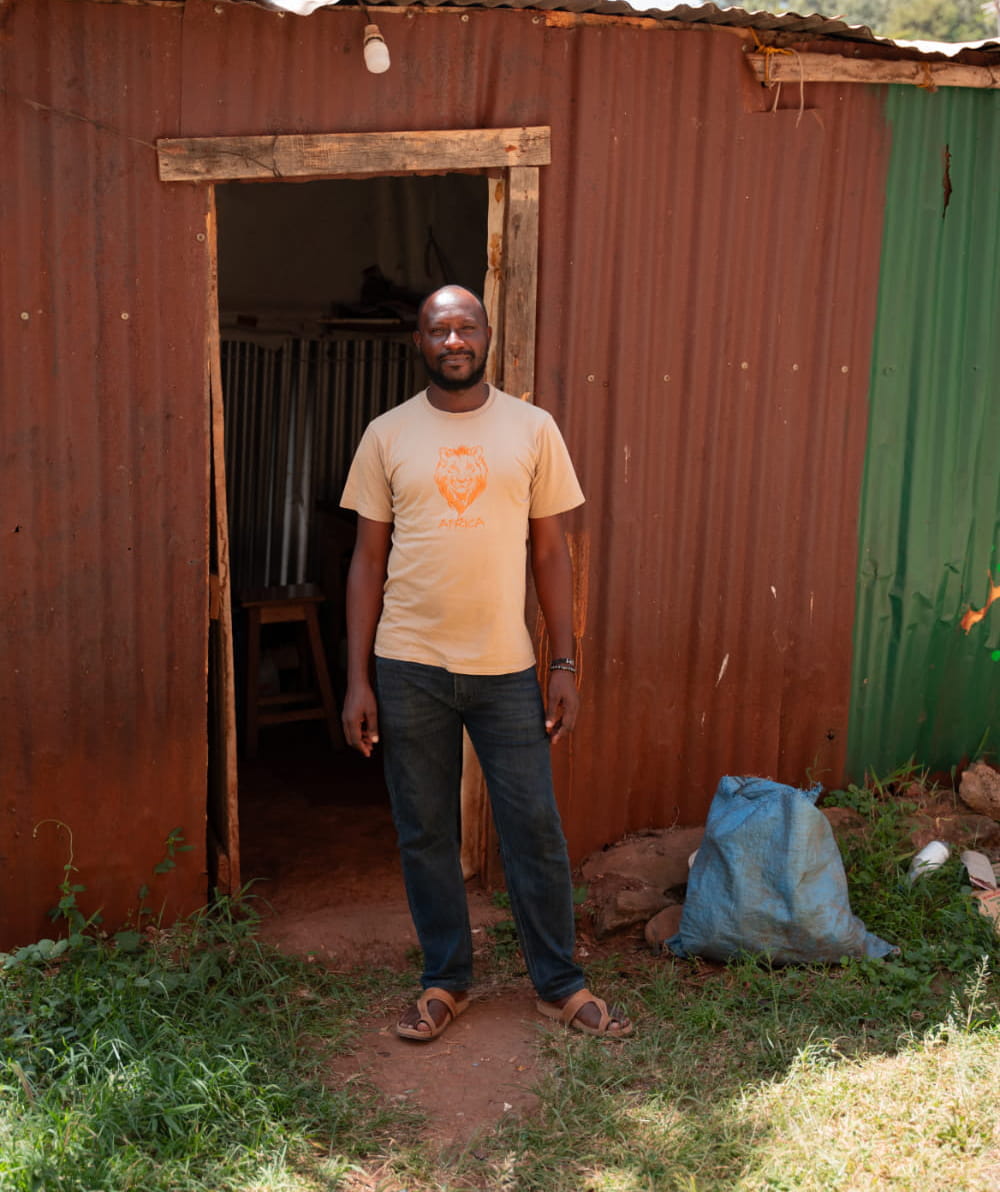
Because the workshop is located far from the main road, attracting customers directly is difficult. Online visibility helps, but access to consistent buyers remains limited. At the same time, competition from cheaper, lower-quality copies of their designs affects their ability to sell their original work.
Working conditions are another challenge. While Wycliffe has access to a small rented shed and some basic machinery, many others work outdoors without shelter. Weather disruptions can stop production entirely, especially for those working under trees or in open spaces. Even in the shed, interruptions such as power outages affect productivity, particularly during finishing stages that require electricity.
Despite these constraints, Wycliffe sees his work as more than a personal livelihood. The workshop connects multiple people — suppliers, artisans, and other home-based workers involved in different stages of production. For him, this shared structure is essential.
“I usually tell them that this is their workshop, not mine. We need each other. I cannot work on a thousand pairs alone.”
Joining HomeNet Kenya marked a shift in how Wycliffe and his group understood their work. Before, they worked individually, focused on earning enough to support their families, without a broader sense of recognition or rights.
“Before, we didn’t know that home-based workers need to be recognized by the government,” he said. “Now we know that with recognition, we can even negotiate.”
Through the organization, they began participating in meetings and engaging with government representatives. Being part of a collective has made it easier to raise concerns and advocate for their needs.
“If I called a government officer as an individual, it would be difficult,” Wycliffe explained. “But if we are a group, they must listen.”
Being part of a larger group also opened access to new opportunities. After the COVID-19 pandemic disrupted markets and reduced sales, some groups, supported through HomeNet Kenya, began exploring alternative sources of income such as kitchen gardens, poultry, and beekeeping. These activities helped provide additional income and reduce dependence on unstable markets.
Beyond economic support, the organization has also contributed to a broader sense of recognition. Wycliffe described a moment during an international meeting where he saw workers from different countries sharing similar experiences.
“I could see people from North America, Nepal, Brazil… I was like, ‘This thing is big.’ It made me feel that I’m not alone. Home-based work is real work and something to be proud of.”
That sense of connection has reinforced the value of their work, not only as a source of income but as part of a larger network of workers contributing to their communities and economies.
Back in the shed, production continues through coordination, shared effort, and adaptation to daily challenges. While conditions remain difficult, the work is sustained by a combination of individual skill, collective organization, and growing recognition of its importance.