

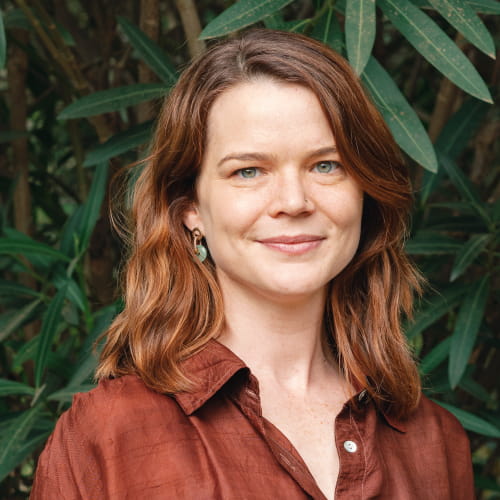
Allison Corkery
s the Law Programme Director at WIEGO – Women in Informal Employment: Globalizing and Organizing. A human rights lawyer specializing in socioeconomic rights, she leads work to strengthen the legal infrastructure that enables organizations of workers in informal employment - across sectors and geographies - to know, use, and shape the law to claim their rights and secure their livelihoods. Before joining WIEGO in 2023, Allison spent more than a decade with the Center for Economic and Social Rights, where she served as the first Director of Strategy and Learning. She holds a BA and LLB from the University of New South Wales, an LLM from Columbia Law School, and an MSc in Inequalities and Social Science from the London School of Economics. She is also a Global Atlantic Fellow for Social and Economic Equity.

Janhavi Dave
is an Advisor at HomeNet International and has dedicated more than 19 years to advancing the rights and livelihoods of women workers in the informal economy. Her expertise centers on organizing and building sustainable, membership-based organizations of informal economy women workers. She began her career with the Self-Employed Women’s Association (SEWA), the largest trade union of informal economy women workers in India, where she supported union member recruitment and the development of worker cooperatives. She subsequently served with HomeNet South Asia as Coordinator and was later appointed the first International Coordinator of HomeNet International, the first global network of membership-based workers’ organizations, representing more than 1.5 million home-based workers from 71 organizations across 30 countries.
At HomeNet International, Janhavi played a key role in advocating for the rights of homeworkers in global garment and footwear supply chains and was instrumental in launching the organization’s global Campaign for the Ratification of the International Labour Organization Convention 177. She is currently a Ph.D. scholar at the Indian Institute for Human Settlements, where her research focuses on the changing nature of work, the evolution of organizing practices, and the regulatory frameworks needed to support the formalization of the informal economy.
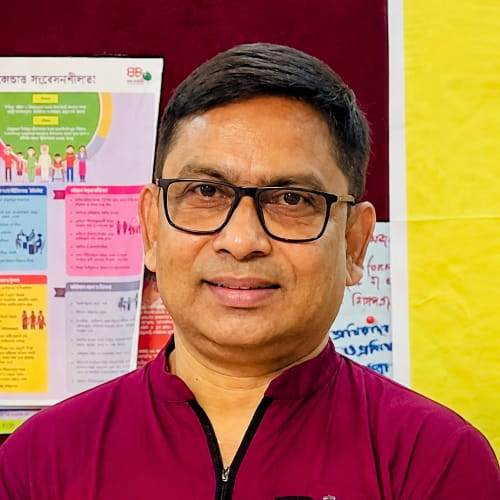
A.R. Chowdhury Repon
is a labour rights advocate, social justice leader, and Chairperson of the Governing Board of Labour at Informal Economy Society (LIE), with over 25 years of experience advancing workers’ rights, occupational safety and health (OSH), decent work, climate justice and Just Transition for workers and communities. In Bangladesh, he is a leading advocate for the formalization and inclusion of informal economy workers, strengthened occupational health and safety, and for robust labour and social protection systems. At the national level, he is a leading campaigner and advocate for business and human rights and Just Transition, promoting decent work and responsible due diligence practices across garment and textile supply chains, with a particular focus on the rights and working conditions of informal textile waste workers. His work promotes worker-centred, inclusive, and sustainable approaches to improving working conditions and shaping the future of work.
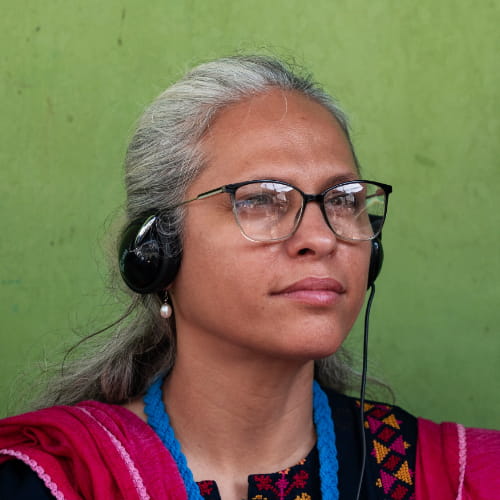
Zehra Khan
is Founder and General Secretary of the Home Based Women Workers Federation (HBWWF), the first ever trade union of home-based workers in Pakistan, registered in 2009. She has played a leading role in organizing home-based and women workers in the textile and garment sectors and in building the home-based workers’ movement in Pakistan. She has worked with the Labour Ministry on legislation, including the Home-based Workers Act, and supported the Labour Department in drafting its rules.
Zehra is a member of several tripartite committees, including the Sindh Employees Social Security Institute (SESSI), Sindh HBWs Governing Body, Sindh Minimum Wage Board, Sindh Tripartite Labour Standing Committee, and Occupational Health and Safety Committee. She has also worked on minimum wages for glass bangle workers and garment and textile workers, and has contributed to research on the Ali Enterprises factory fire and garment and textile supply chains in Pakistan.