

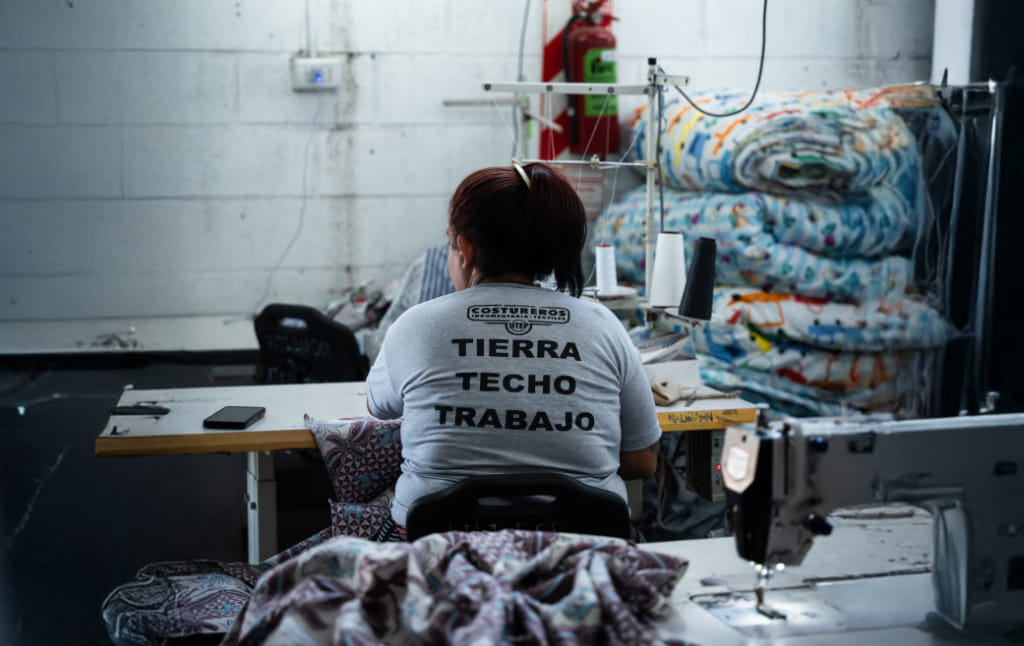
HomeNet International (HNI) is advancing its global campaign, “Home-Based Workers United Towards Ratification of ILO C177, Labour Rights, Social Protection and Decent Work”, with renewed urgency, using International Workers’ Day to amplify its message. We are calling on governments, employers, and formal trade unions to listen and act.
In 2019, the International Labour Organization (ILO) estimated that there are approximately 260 million home-based workers worldwide, 57% of them women balancing remunerative work with domestic and care responsibilities. These workers often face low wages, little to no social protection, and poor working conditions. Despite their growing numbers, progress in securing protections for home-based workers remains limited, with only 13 countries having ratified ILO Home Work Convention No. 177 (C177) as of 2026. This highlights why C177 is so important: beyond a legal milestone, it is a strategic tool to pressure governments to recognise home-based workers and establish policy frameworks that address their realities.
Adopted in 1996, the Convention calls on governments to develop and implement national policies on home work in consultation with employers and worker organisations, ensuring equal treatment with other wage earners while recognising the specific nature of home-based work. This includes protections in freedom of association and collective bargaining, non-discrimination, occupational safety and health, remuneration, social security, access to training, minimum age for work, and maternity protection.
The HNI Executive Committee has stressed the urgency of moving towards ratification of ILO C177, as it commits governments to concrete action and lays the foundation for stronger national policies. At the same time, recognising that not all countries are in a position to ratify, the campaign also promotes the development and strengthening of national policies, legal frameworks, and guidelines. With 14 countries currently implementing the campaign, HNI affiliates are leading national and local efforts, supported by HNI’s capacity strengthening in advocacy and organising.
The campaign addresses structural power imbalances between home-based workers, governments, and employers, particularly in global supply chains where decisions affecting livelihoods are made far from workers’ homes. It also recognises the diversity of home-based work by including both homeworkers and self-employed home-based workers.
While ILO Home Work Convention No. 177 applies to homeworkers, who produce goods or services for an employer or contractor, often through layers of subcontracting and intermediaries, self-employed workers operate independently. They are not tied to a specific employer, instead, they source their own raw materials, invest in tools and utilities, organise production and transport, and find their own markets. In doing so, they absorb the full risks and costs of production without the protections or stability associated with formal employment.
As a result, self-employed workers face barriers such as limited market access, weak bargaining power with buyers and suppliers, lack of affordable credit, poor infrastructure, insecure housing, and exclusion from policy frameworks. Ensuring that both homeworkers and self employed workers are represented is a core strength of the movement.
In this context, ILO C177 and ILO Recommendation No.184 provide important guidance for self-employed home-based workers not covered by the Convention, offering pathways to extend rights, strengthen social protection, and support formalisation.
This May Day, HNI calls on governments to recognise home-based workers as workers, take concrete steps to ratify C177 or strengthen inclusive national policies, and engage directly with home-based workers demanding a seat at the table. We urge employers to ensure fair practices across supply chains, and formal trade unions to stand in solidarity by fully including and supporting home-based workers. To learn more and support HNI’s global campaign, visit: